
How to Find a Reliable Outdoor Furniture Supplier in China: 7 Verification Steps
Finding a trustworthy outdoor furniture supplier in China can make or break your furniture business. When you choose the wrong supplier, they deliver late, ship defective products, and disappear when you need support. In contrast, the right partner becomes a long-term ally who helps you grow your brand and satisfy your customers.
Fortunately, this guide breaks down 7 concrete verification steps you can take before placing a production order. Each step takes less than a day to complete. Together, they eliminate 90% of the risk in sourcing outdoor furniture from China.
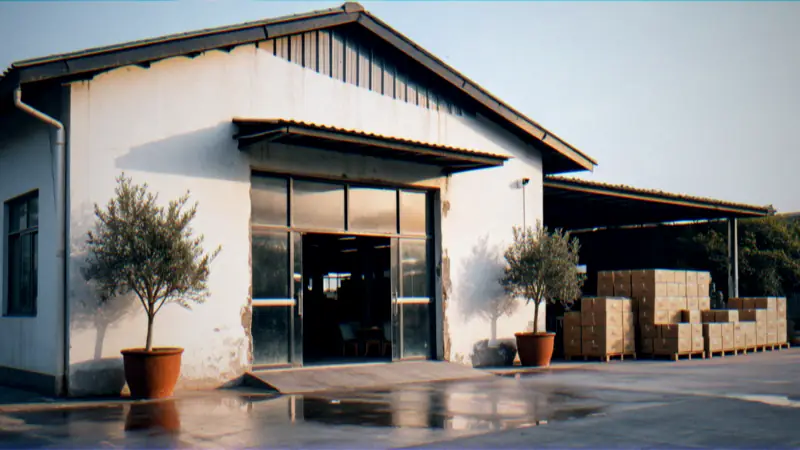
The Quick Answer
To verify an outdoor furniture supplier in China: (1) verify the business license on China’s official registry; (2) request a live video factory tour through production areas; (3) check for ISO 9001, BSCI, or SGS certifications; (4) order and inspect physical samples; (5) test technical knowledge with specific material questions; (6) contact existing clients for references; (7) hire a third-party inspector for pre-shipment QC. In total, the verification time runs 7-14 days. Meanwhile, the cost comes to $300-500 for inspection plus sample fees. Ultimately, this investment protects orders worth $10,000-$100,000+.
Why Supplier Verification Matters
Every year, B2B buyers lose money to fake suppliers. The most common traps include trading companies pretending to be factories, shell companies with no production capacity, and legitimate factories that cut corners on materials after the first order. Consequently, a single bad container of outdoor furniture can cost you $15,000-$50,000 in defective products, return shipping, and lost customer trust.
Fortunately, verification costs a fraction of what a bad order costs. The 7 steps below give you a systematic way to separate real manufacturers from pretenders. For a broader overview of the sourcing process, read our wholesale outdoor furniture sourcing guide first, then use this article to drill into supplier verification.
Step 1: Verify the Business License
What to Check
First, note that every legitimate Chinese company holds a business license issued by the local Administration for Market Regulation. This document contains the information you need to separate real factories from trading companies and shell operations.
Next, request a copy of the business license and verify these fields:
| Field | What to Look For | Red Flag |
|---|---|---|
| Company name | Matches the name on the proforma invoice | Name mismatch suggests a middleman |
| Registered capital | 500,000 RMB minimum for manufacturing | Below 100,000 RMB indicates a small trader |
| Business scope | Includes “furniture manufacturing” or “production” | Only “trading” or “import/export” = trading company |
| Establishment date | 3+ years indicates stability | Registered within last 12 months = new or shell |
| Unified Social Credit Code | 18-digit number you can verify online | Refusal to provide = major red flag |
How to Verify Online
Next, verify the Social Credit Code on China’s official National Enterprise Credit Information Publicity System at gsxt.gov.cn. Type the company name or code into the search bar. Subsequently, the system returns the registered address, legal representative, and business scope. If the information does not match what the supplier gave you, walk away immediately.
Step 2: Request a Live Video Factory Tour
A business license proves the company exists. However, a video tour proves they actually make furniture. Schedule a video call during Chinese business hours (9:00 AM to 6:00 PM Beijing time, Monday to Friday) and ask the supplier to walk you through the production floor in real time.
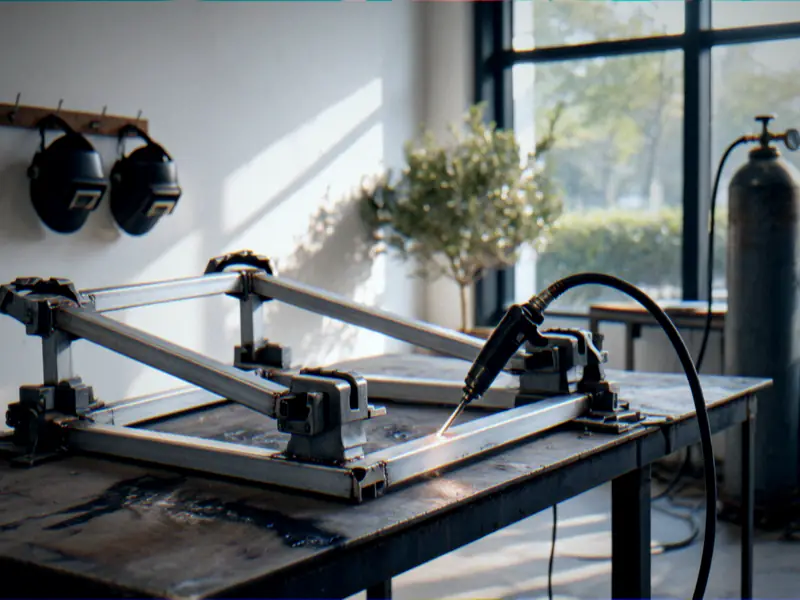
What to Look For During the Tour
- Welding area — First, look for aluminum TIG welding stations with gas bottles, welding jigs, and partially assembled frames. Also check for ventilation systems and safety equipment.
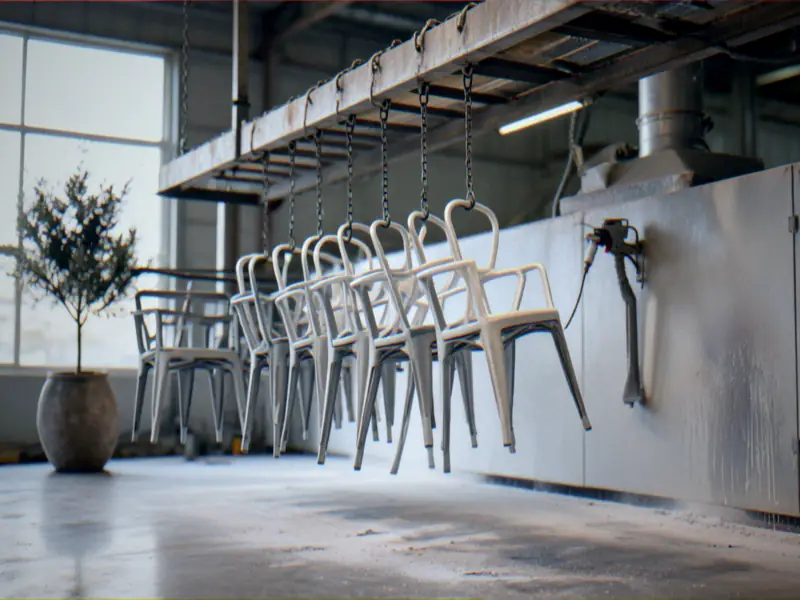
- Powder coating line — Next, look for a spray booth, curing oven, and hanging conveyor system. A real factory coats its own frames. In contrast, a trading company has nothing to show here.
- Rattan weaving area — Additionally, workers should be weaving rattan over aluminum frames. This is labor-intensive work that requires physical space and skilled hands.
- Assembly and packaging area — Furthermore, look for workbenches with tools, finished products being assembled, and cardboard cartons with protective packaging materials.
- Raw material storage — Also, aluminum tubes should be in racks, rattan coils on shelves, and fabric rolls in a separate area. A real factory stocks materials for production runs.
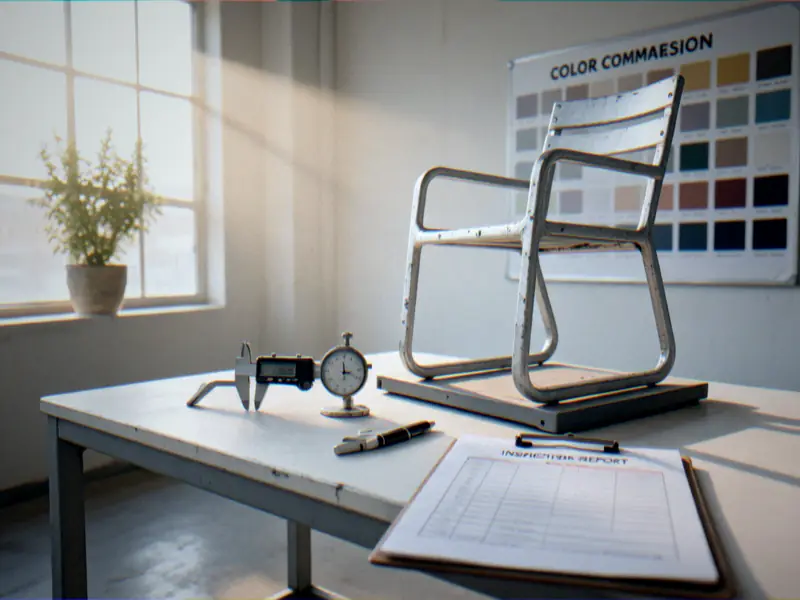
- Quality control station — Finally, look for measuring tools, thickness gauges, color comparison charts, and a designated inspection area separate from production.
In contrast, a trading company will deflect. Specifically, they will offer to show you a showroom instead of a factory floor. Furthermore, they will say the factory is “in another city” or “under renovation.” Instead of live footage, they will send pre-recorded videos. These responses tell you everything you need to know.
Step 3: Check Certifications and Audit Reports
Certifications cost factories real money and require annual audits. Therefore, a factory that invests in certifications signals commitment to quality and compliance. Not every supplier needs every certification, but the absence of all certifications is a warning sign.
| Certification | What It Proves | Cost to Factory |
|---|---|---|
| ISO 9001 | Quality management system meets international standards | $3,000-8,000/year |
| BSCI | Social compliance (fair labor, safe working conditions) | $2,000-5,000/year |
| SGS factory audit | Third-party verification of production capacity and QC | $1,500-3,000/audit |
| RoHS / REACH | Material safety compliance for EU markets | $500-2,000/product |
| CE marking | Product meets EU safety standards | $1,000-3,000/product |
How to Verify Certificate Authenticity
Moreover, ask for scanned copies of current certificates, not photos of framed documents on a wall. Then, verify the certificate number on the issuing body’s website. For example, ISO 9001 certificates can be verified through the certification body’s online database. Unfortunately, expired or forged certificates are common among lower-tier suppliers.
Similarly, our OEM/ODM manufacturing services page details the certifications and quality standards we maintain at Hiway Trade.
Step 4: Order and Inspect Physical Samples
Of course, no amount of video tours and certificates replaces holding a product in your hands. Therefore, order samples of the exact models you plan to buy in bulk. A legitimate outdoor furniture factory in China will charge you a sample fee (typically 1.5-2x the bulk price) and ship within 5-10 days.
Sample Inspection Checklist
- Weight — First, weigh the frame. An aluminum dining chair should weigh 4-6 kg. Consequently, a 2 kg chair uses thin-gauge tubes that will bend under use.
- Tube thickness — Next, use calipers to measure the aluminum tube wall. Specifically, minimum 1.2mm for seating and 1.5mm for tables.
- Weld quality — Then, run your fingers over weld joints. Smooth, uniform welds indicate TIG welding. In contrast, lumpy and uneven welds suggest MIG or hand welding.
- Coating finish — Additionally, press tape firmly on the powder coating and pull off quickly. If no paint flakes appear, adhesion is good. Also, check for orange peel texture (acceptable) vs. runs and drips (unacceptable).
- Rattan tightness — Furthermore, pull the rattan weave. It should not slide or gap. Moreover, check for frayed ends or loose staples.
- Cushion fabric — Then, pour water on the cushion. It should bead and roll off if treated for outdoor use. Otherwise, absorbent fabric will mildew within months.
- Assembly — Finally, fully assemble the product. Check for misaligned holes, missing hardware, and wobbly joints.
For material-specific testing standards, meanwhile, our aluminum vs steel outdoor furniture guide covers frame material benchmarks in detail.
Step 5: Test Technical Knowledge
Factory sales staff who understand their products can answer specific technical questions. Conversely, trading company sales staff who never set foot on a production floor cannot. Use this difference to your advantage.
10 Technical Questions to Ask
- First, what aluminum alloy grade do you use for chair frames? (Answer: 6063 or 6061)
- Next, what is the tube wall thickness for your standard dining chair? (Answer: 1.2-2.0mm)
- Then, what powder coating thickness do you apply, in microns? (Answer: 60-80 microns)
- Additionally, is your rattan UV-stabilized PE or PVC? (Answer: PE, 1.2mm+ thickness)
- Also, what fabric weight do you use for outdoor cushions? (Answer: 180-250 gsm)
- Furthermore, do you use TIG or MIG welding for aluminum frames? (Answer: TIG for precision, MIG for heavy frames)
- Moreover, what is your salt spray test rating for coated frames? (Answer: 500-1000 hours minimum)
- Then, what is your standard carton thickness for export packaging? (Answer: 5-ply, 700gsm)
- Additionally, how many welding stations do you operate? (Answer should match what you saw in the video tour)
- Finally, what is your monthly production capacity for outdoor sofas? (Answer: 2,000-10,000 pieces for a mid-size factory)
Interpreting the Answers
Vague answers like “good quality” or “standard thickness” tell you the salesperson has never been inside the factory. In contrast, a real manufacturer states specific numbers without hesitation. After all, they live with these specifications every day.
Step 6: Contact Existing Client References
Generally, a supplier with satisfied B2B clients will share references willingly. On the other hand, one with unhappy or nonexistent clients will not. Ask for 2-3 client contacts in your country or region, then call or email them directly.
What to Ask References
- First, how long have you worked with this supplier?
- Next, have you experienced quality issues? If so, how were they resolved?
- Then, did production meet the agreed lead time?
- Additionally, would you place another order with this factory?
- Finally, how does this supplier compare to others you have used?
Evaluating Reference Responses
Importantly, references who give detailed, balanced feedback (positive points and areas for improvement) are credible. Conversely, references who sound like they are reading a script, or who cannot answer specific questions about production timelines, may be fabricated.
Furthermore, for more context on how commercial buyers evaluate suppliers, our commercial outdoor furniture buying guide covers the procurement evaluation process from the buyer’s perspective.
Step 7: Hire a Third-Party Pre-Shipment Inspection
Even after verifying everything in steps 1-6, you should still hire an independent inspection company to check your goods before they ship. Specifically, SGS, Bureau Veritas (BV), and TUV charge $300-500 per inspector-day. For an order of $10,000 or more, this is the cheapest insurance you will ever buy.
What a Pre-Shipment Inspection Covers
- Quantity check — First, count units against the packing list
- Visual inspection — Next, check for surface defects, coating quality, and color matching
- Dimension check — Then, measure critical dimensions against specifications
- Functional test — Additionally, verify assembly, stability, and moving parts operation
- Package check — Furthermore, inspect carton strength, labeling, and moisture protection
- AQL sampling — Finally, statistical sampling per ISO 2859 standard (typically AQL 2.5 for major defects)
Typically, the inspector issues a detailed report with photos within 24 hours of the inspection. If defects exceed the agreed AQL limit, you can withhold the 70% balance payment and require the factory to rework or replace the defective units before shipping.
Factory vs Trading Company: How to Tell the Difference
| Indicator | Real Factory | Trading Company |
|---|---|---|
| Business scope | Includes “manufacturing” | Only “trading” or “import/export” |
| Video tour | Shows production floor live | Shows showroom or office only |
| Technical questions | Answers with specific numbers | Gives vague or evasive answers |
| Sample pricing | 1.5-2x bulk price | 2-3x bulk price (extra margin) |
| Lead time | 25-35 days for standard products | 35-50 days (factory is a middleman) |
| Customization | Accepts OEM design changes | Limited or needs to “check with factory” |
| MOQ flexibility | Negotiable based on production schedule | Rigid (factory sets it, not them) |
| Factory address | Industrial zone, manufacturing district | Office building in commercial district |
When a Trading Company Makes Sense
Admittedly, trading companies are not always bad. A good trading company offers product variety, handles multiple factories, and manages logistics. However, you pay 10-20% more for that service, and you have less control over production quality. For buyers who want factory-direct pricing and production oversight, working with an actual manufacturer remains the better choice.
Red Flags That Should Stop You Immediately
Walk Away If You See These
- Prices 40%+ below market average — Consequently, the factory will cut material quality to recover the discount
- Refusal to provide a business license number — Clearly, the company is hiding something
- No video tour possible, ever — Obviously, there is no factory
- Pressure to pay 100% upfront — As a result, you lose all leverage if quality fails
- Generic product photos from multiple websites — Evidently, the supplier does not manufacture these products
- Unable to answer any technical question with specifics — In fact, they are a trader pretending to be a factory
- No export experience to your country or region — Consequently, customs and certification requirements will cause delays
- Email address from a free provider (Gmail, Yahoo) — Notably, professional factories use company domain email
What a Verified Supplier Looks Like
After completing all 7 steps, a verified outdoor furniture supplier in China should meet the following profile:
- First, a business license with manufacturing scope, registered 3+ years
- Additionally, a live video tour showing welding, coating, weaving, and packaging areas
- Furthermore, ISO 9001 certification and at least one third-party audit report
- Also, physical samples that pass your material and assembly inspections
- Moreover, sales staff who answer 8+ of 10 technical questions with specific numbers
- Then, 2-3 client references who give detailed, balanced feedback
- Finally, a pre-shipment inspection report showing AQL-compliant quality
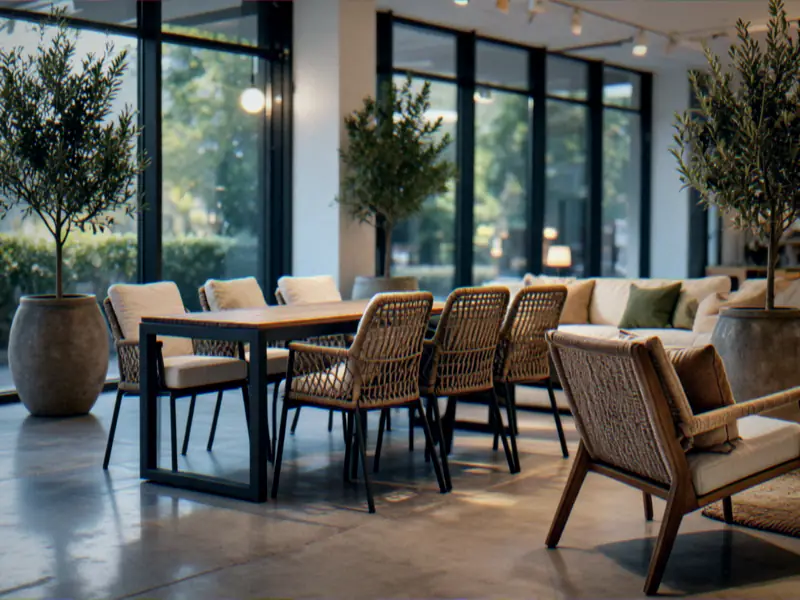
As an example, Hiway Trade meets every criterion on this list. Specifically, we have manufactured outdoor furniture for 15+ years, hold ISO 9001 certification, maintain in-house welding, powder coating, and rattan weaving production lines, and ship to 50+ countries. Browse our product catalog to see outdoor chairs, outdoor sofas, and outdoor tables produced in our facility. Learn more about our factory or explore our patio furniture collection.
Ready to Work with a Verified Manufacturer?
Hiway Trade passes all 7 verification steps above. Therefore, request a live video tour, order samples, or ask us any technical question. We answer with specifics, not vague claims.
Request a Factory TourFrequently Asked Questions
Supplier Verification FAQs
How can I verify a Chinese outdoor furniture supplier is a real factory?
What certifications should a Chinese outdoor furniture factory have?
How do I check if a Chinese furniture supplier is a trading company or a factory?
Quality, Inspection & Red Flags
What questions should I ask a Chinese outdoor furniture supplier before ordering?
Should I hire a third-party inspection company for outdoor furniture from China?
What are red flags when choosing an outdoor furniture supplier in China?
Ready to verify Hiway Trade? Contact us for a live factory tour, sample order, or technical Q&A. Additionally, read more B2B sourcing insights on our blog, or learn about our OEM/ODM capabilities.