Buying your first set of outdoor garden furniture feels like a huge gamble. You have to spend your hard-earned money on furniture that must withstand the scorching sun, torrential rain, and the bitter cold of winter—all while ensuring it’s both attractive and comfortable.
Most beginners fall into the same trap: they buy a nice, inexpensive set online, only to watch it rust, warp, or fade before the season is even over.
In fact, the quality inspection standards for outdoor furniture are even stricter than those for indoor sofas. If you want to avoid buyer’s remorse, you need to learn how to measure your space, choose the right materials based on the local climate, and identify potential red flags before you swipe your card to pay.
This beginner’s buying guide breaks down exactly how to invest in patio furniture that lasts.
Let’s dive right in.
Garden Outdoor Furniture Buying Guide for Beginners: Mapping Your Space
Ever bought a beautiful outdoor setup only to realize you have to shimmy sideways just to sit down? You are not alone. The biggest mistake we see beginners make isn’t picking the wrong style—it is misjudging the physical footprint of their garden outdoor furniture. Before looking at materials, you need a no-regrets spatial layout.
Spatial Clearance Rules: Avoiding the Crowding Pitfall
To keep your patio functional, you must factor in human movement, not just the physical dimensions of the outdoor furniture.
- Dining Set Clearance: Please make sure to leave at least 36 inches of space between the edge of the outdoor dining table and any walls or obstacles. This will allow guests to pull out their chairs easily and walk comfortably behind seated guests.
- Traffic Pathways: Leave a clear walking path of 30 to 45 inches for major thoroughfares across your deck or patio.
- Lounging Space: For modern sectional sofas and coffee tables, keep a 12 to 18-inch gap between the seating and the table edge to keep drinks within reach without jamming your knees.
| Furniture Type | Recommended Footprint | Minimum Clearance Required |
| 4-6 Chair Dining Set | 10 x 10 feet | 36 inches around table |
| Sectional Sofa & Table | 12 x 12 feet | 18 inches from coffee table |
| Bistro Set (Balcony) | 6 x 6 feet | 24 inches around chairs |
Matching Furniture Styles to Your Architectural Layout
Your outdoor area should feel like an extension of your indoor living space. As an outdoor furniture manufacturer, we design pieces to complement specific architectural footprints.
- Urban Balconies & Small Patios: Focus on sleek, balcony space-saving furniture. Look for nesting chairs or vertical profiles that do not overwhelm tight boundaries.
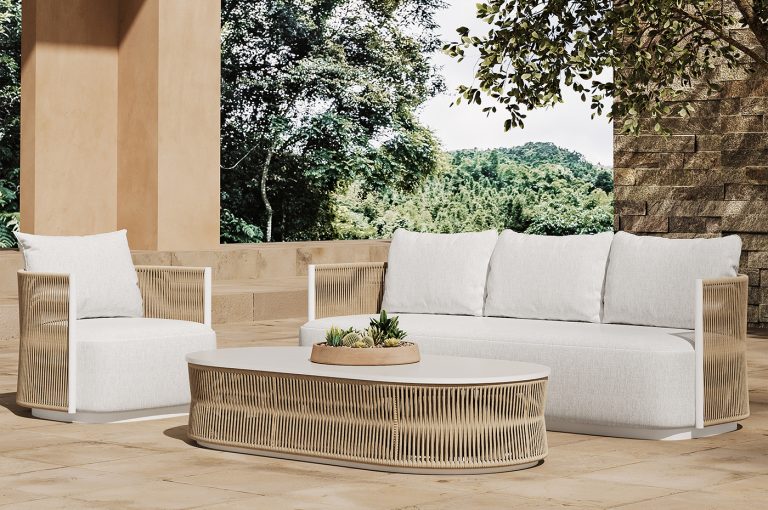
- Modern & Contemporary Decks: Linear, low-profile modern sectional sofas mirror the clean lines of contemporary architecture and keep sightlines open.
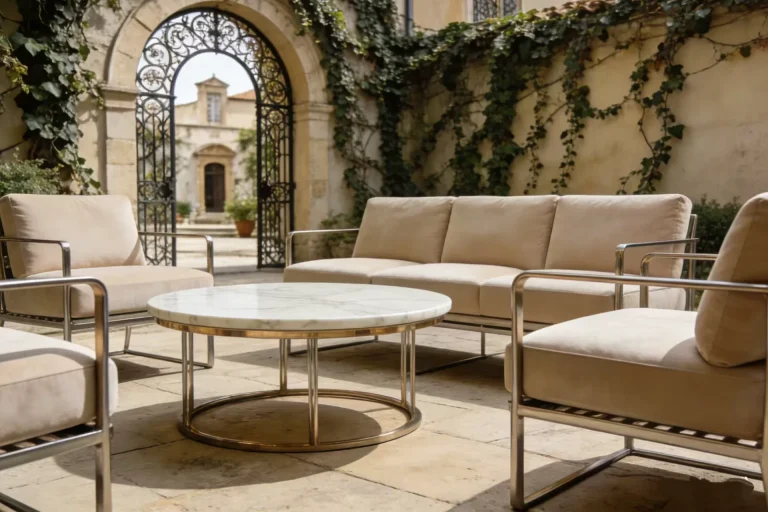
- Traditional Gardens & Green Spaces: Classical rust-resistant garden dining sets or wrought-iron silhouettes blend naturally into lush, organic landscapes without competing with your greenery.
Step 2: The Material Breakdown (What Actually Lasts Outdoors?)
Choosing the wrong patio furniture materials is the fastest way to waste your budget. Outdoors furniture faces constant UV exposure, moisture, and temperature swings. To get the best return on your investment, you need to look past showroom aesthetics and focus on structural longevity.
Powder-Coated Aluminum Frames: The Gold Standard for Low Maintenance
If you’re looking for furniture that’s durable and requires minimal maintenance, aluminum is undoubtedly the best choice. Unlike iron or steel, aluminum is naturally rust-resistant, making it an ideal material for high-end outdoor garden furniture.
- Why it excels: We apply a baked-on powder coating to our frames, creating an impermeable barrier against moisture and scratches.
- Weight & Strength: It is lightweight enough to rearrange easily but structurally robust enough to handle daily use.
- The Ultimate Coastal Choice: For properties facing heavy humidity or salt air, choosing powder-coated aluminum frames prevents the structural degradation common with other metals.
Natural Wood and Synthetics: Aesthetics vs. Reality
| Material Type | Pros | Cons | Best Used For |
| Teak / Hardwood | Gorgeous organic look; high natural oil content resists rot. | Requires annual oiling; turns silver-gray if untreated. | Covered patios or dry climates. |
| UV-Resistant Wicker | Traditional texture; lightweight and highly flexible. | Budget options split under sun; requires high-density polyethylene (HDPE). | Transitional indoor-outdoor spaces. |
| Standard Plastics | Inexpensive; highly portable. | Fades quickly; prone to cracking under intense UV heat. | Temporary or low-use seating. |
While natural wood certainly offers an undeniable sense of warmth, it requires regular seasonal sealing. If you prefer a low-maintenance option, high-quality synthetic materials or metal are much more practical for long-term, low-maintenance deck finishes.
The Hidden Core: Quick-Dry Foam and Weatherproof Outdoor Fabrics
The frame keeps the furniture standing, but the cushions dictate how long you can actually enjoy it. Regular indoor foam acts like a sponge, trapping water and breeding mold.
- Quick-Dry Foam cushions: These feature an open-cell structure that allows water to pour straight through rather than absorbing it.
- Solution-Dyed Fabrics: Instead of printing color onto the surface of the fiber, solution-dyed fabrics infuse the pigment directly into the core. This creates weatherproof outdoor fabrics that resist severe UV bleaching, chlorine, and spills, keeping your investment looking pristine for seasons to come.
Step 3: Climate Matching (Choosing Outdoor Furniture for Your Local Weather)
The local climate determines how well your patio furniture will stand the test of time. As an outdoor furniture manufacturer, we understand that choosing the right materials for your patio furniture based on the specific climate conditions in your area is key to whether a set of furniture will last for ten years or wear out after just two seasons.
High Moisture & Rain-Heavy Environments
Persistent rain and high humidity will quickly destroy poorly protected pieces. In wet climates, your main enemies are rust, mold, and wood rot.
- Best Framework: Go for powder-coated aluminum frames. Aluminum does not rust, and the powder coating adds a thick layer of defense against moisture.
- Cushion Essentials: Look for quick-dry foam cushions paired with weatherproof outdoor fabrics. These cushions feature an open-cell structure that lets water drain straight through instead of trapping it like a sponge.
- Materials to Avoid: Untreated woods and cheap wrought iron will degrade or rust rapidly under constant downpours.
Intense Sun & Arid Desert Regions
If materials, structures, or fabrics are not specifically designed to withstand extreme sunlight, scorching heat and prolonged UV exposure can cause them to crack, warp, or fade within a matter of months.
- UV Resistance: If you love the look of wicker, you must use high-grade, UV-resistant wicker (high-density polyethylene). Cheap PVC wicker will dry out, become brittle, and snap under intense heat.
- Fabric Choice: Please use a solution to dye the acrylic fibers. These fibers have been dyed throughout the entire fiber before weaving, ensuring that your cushions will retain their color even under direct sunlight.
- Pro Tip: Metal frames can get scalding hot in direct desert sun. Opt for sets with fabric slings, performance cushions, or light-colored finishes to keep the seating surfaces usable.
Coastal Elements & Salt Air High-Exposure Zones
The salty sea breeze is highly corrosive and accelerates the deterioration of ordinary metals and surface coatings. If your home is exposed to sea breezes, you’ll need to take the most effective protective measures to withstand this salty environment.
Coastal Warning: Standard steel and low-grade hardware will pit and rust almost immediately near the ocean.
- The Coastal Shield: Marine-grade aluminum and dense synthetics are excellent choices here. For specific strategies on selecting materials that withstand seaside conditions, check out our guide on how to choose outdoor furniture for coastal areas.
- Hardware Matter: Ensure all connecting screws and brackets are made of high-quality stainless steel to prevent localized rusting at the joints.
Step 4: Define Your Lifestyle Zone (Dining vs. Lounging)
Before choosing any garden outdoor furniture, you must decide how you actually intend to use your outdoor space. Trying to force a single area to handle large family cookouts and quiet afternoon naps usually results in a cluttered, dysfunctional layout. We design our collections to serve specific lifestyle zones, ensuring your investment matches your daily habits.
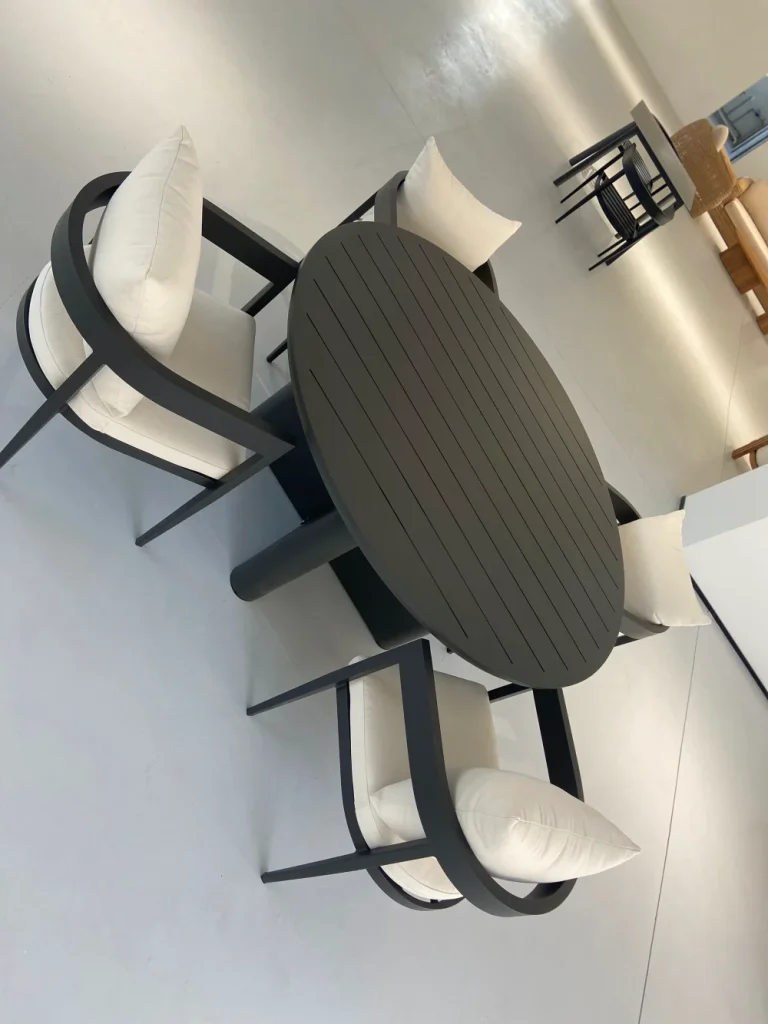
The Hosting Hub: Outdoor Dining Sets
If weekend dinner parties and family party are your priority, your space needs to be built around a durable, high-capacity setup.
- Proportional Seating: Ensure your table accommodates your typical guest count without overcrowding. An extendable dining table offers the best of both worlds, giving you compact everyday utility and extra seating capacity when hosting.
- Ergonomic Support: Dining outdoors lasts longer when everyone is comfortable. Pairing your table with a supportive dining armchair provides the necessary upper-body support for long evenings of conversation.
- Clearance Rules: Always leave a 36-inch perimeter around your dining set so guests can pull out chairs and walk behind seated individuals without bumping into walls or railings.
The Rest & Relaxation Zone: Lounges and Chaises
If your primary goal is unwinding, skip the formal tables entirely and focus on low-slung, deeply cushioned setups that mimic a living room environment.
- Modern Sectionals: Modular sofas are perfect for open-air patios, as you can freely adjust the layout depending on the number of guests or the amount of sunlight.
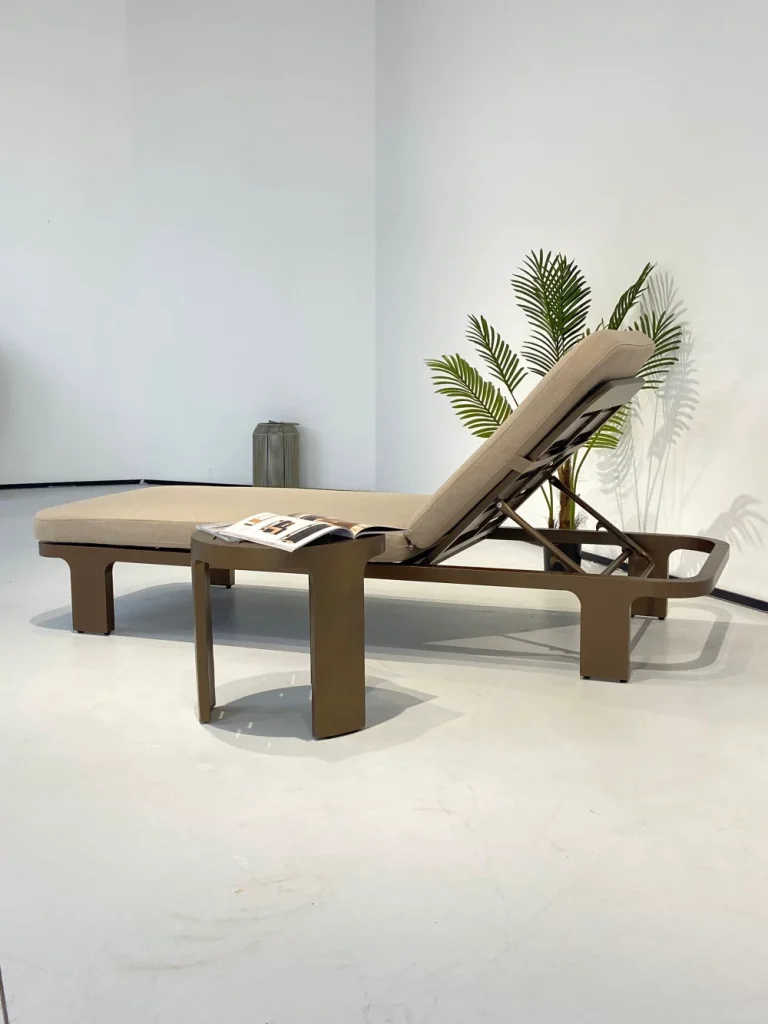
- Sun Loungers and Chaises: A must-have for poolside or dedicated sunbathing areas. We recommend choosing a chair with a multi-position adjustable backrest, so you can seamlessly transition from reading to taking a nap.
- Material Selection: Since casual clothing comes into direct contact with the body for long periods of time, you should prioritize weather-resistant fabrics, which remain cool to the touch even in direct sunlight.
Step 5: Buying Smart (Warranties, Packages, and Long-Term Value)
When shopping for outdoor garden furniture, low prices can often be deceptively attractive. Poor-quality materials may warp, crack, or fade within a single season, forcing you to replace the entire set. A wise purchasing decision should focus on the total cost of ownership over the next five to ten years, rather than just the upfront cost. As an experienced outdoor furniture manufacturer, we always advise buyers to carefully review the warranty terms—genuine commercial-grade patio furniture should come with a multi-year warranty covering both the structural frame and the fabric finish.
The Myth of the “Cheap Fixed Set”: Prioritizing Modular Longevity
Many beginners fall into the trap of buying cheap, inflexible sofa sets with fixed layouts. If you move or want to rearrange your patio, these inflexible sets offer absolutely no flexibility. Instead, prioritizing the durability of modular furniture is the ultimate shortcut to long-term value.
- Adaptable layouts: Modular sofas can be disassembled or expanded with new modules to accommodate your changing needs for entertaining guests.
- Targeted repairs: If a part is damaged, you only need to replace that specific module; there’s no need to replace the entire patio set.
- Higher structural integrity: These meticulously crafted modular cases feature a sturdy locking mechanism and a high-quality, independent structure, giving them a service life far longer than that of flimsy, cheap, one-piece models.
Leveraging Cohesive Design Bundles
Buying garden furniture piecemeal often results in a disjointed and cluttered look in your yard. Choosing a coordinated set ensures that your dining table, side tables, and chairs are consistent in terms of materials, finishes, and color schemes.
Purchasing sets can also result in significant cost savings. Manufacturers typically offer discounts on carefully curated sets, as packaging and shipping an entire set is much more efficient than handling individual items. To create a beautiful focal point for your outdoor living space, consider pairing a modular sofa with a durable, weather-resistant lounge chair—this will help you design a stylish and functional entertaining area without breaking the bank.
Post-Purchase Care: Keeping Your Outdoor Set Mint
Investing in high-quality outdoor garden furniture is just the first step. To truly protect your investment and ensure its longevity, it’s essential to establish a proactive maintenance plan. As an outdoor furniture manufacturer, we know exactly how to keep your furniture looking as good as new through all four seasons.
The Two-Minute Rule: Why Heavy-Duty Patio Covers Matter
The absolute easiest way to extend the lifespan of your setup is by using heavy-duty patio covers. It takes less than two minutes to cover your furniture after use, but it saves hours of cleaning later. UV Protection: High-density covers block harsh sunlight that degrades weatherproof outdoor fabrics and causes colors to fade. Moisture Barrier: Quality covers keep rain, bird droppings, and tree sap off your powder-coated aluminum frames and cushions. Storage Shortcut: If you lack a garage or shed, a secure, breathable cover is your best defense against winter moisture buildup.
Simple Bi-Annual Maintenance Checklists
A quick deep clean twice a year—once in the spring before patio season starts, and once in the autumn before packing it away—keeps your low-maintenance patio decor in pristine shape.
| Material Type | Spring Maintenance Task | Autumn Storage Task |
| Aluminum & Wicker | Wash down with mild soapy water; check for deep scratches. | Wipe clean, dry completely, and apply protective covers. |
| Outdoor Fabrics | Brush off loose dirt; spot-clean stains with a soft brush. | Store quick-dry foam cushions indoors or in a dry deck box. |
For a deeper dive into preserving your investment, check out our professional guide on how to maintain outdoor furniture to last 10 years to get the absolute most value out of your setup. Taking care of your gear ensures your outdoor entertaining layouts remain welcoming, beautiful, and ready for guests at a moment’s notice.