The Hidden Enemies: Why Coastal Environments Destroy Regular Outdoor Furniture
Living by the water is a dream come true, but choosing outdoor furniture for coastal areas presents a unique set of challenges. Ordinary patio furniture simply cannot withstand the harsh coastal environment. Before furnishing your home, you need to understand the hidden dangers that erode ordinary backyard furniture day and night.
The Salt Air Factor
Salt crystals in the air are extremely corrosive. When salt spray settles on ordinary metal surfaces, it accelerates oxidation, causing the metal to rust quickly and structurally damage. For inferior wood, these tiny salt crystals trap moisture within the grain, leading to warping, cracking, and internal rot. To resist this corrosion, materials specifically designed to combat seawater corrosion must be used.
Intense UV Amplification
The sunlight is significantly more intense in coastal areas. Sunlight reflected off the water and white sand doubles the amount of ultraviolet radiation received on patios or courtyards. This intense UV radiation can break down the chemical bonds in inexpensive plastics and fabrics, causing them to fade, crack, and become severely brittle within a single season.
Wind Load and Sand Abrasion
Coastal areas are frequently battered by strong winds and dust storms. Lightweight furniture can easily become dangerous projectiles during storms. Furthermore, windblown sand acts like sandpaper, constantly eroding the furniture, peeling away cheap surface coatings until the unprotected raw material underneath is exposed.
The Fastener Trap
A frame is only as strong as its smallest components. Many manufacturers use premium materials for the main frame but cut corners on the hardware. Standard screws and bolts rust from the inside out when exposed to ocean air. As the fasteners degrade, they expand, cracking the surrounding material and causing the entire structure to collapse.
| Coastal Threat | Primary Impact on Regular Furniture | Required Defense |
| Salt Air | Rusts metals; traps moisture in cheap wood | Saltwater corrosion resistance |
| Double UV Exposure | Fades fabrics; makes plastics brittle | UV-stabilized polymer furniture |
| High Winds & Sand | Blows away light sets; strips surface finishes | Heavyweight, abrasive-resistant builds |
| Standard Hardware | Corrodes internally; breaks frame joints | Marine-grade stainless steel fasteners |
Best Materials for Seaside Outdoor Furniture: What Survives vs. What Fails
Choosing the right materials for seaside outdoor furniture is the difference between an investment that lasts for years and a rusted pile of junk headed for the landfill. We have tested how different materials hold up against brutal coastal elements. Here is our breakdown of what actually survives the salt air, and what fails completely.
The Survivors: Built for Saltwater Corrosion Resistance
- High-Density Polyethylene (HDPE) Lumber: This is ideal for coastal environments, requiring no maintenance and offering long-lasting durability. Furniture made from UV-stabilized polymers like high-density polyethylene (HDPE) has a uniform color throughout, meaning it won’t fade, crack, or peel, and it’s heavy enough to withstand strong sea winds.
- Grade-A Teak Patio Sets: A top-tier natural choice. Genuine Grade A marine teak boasts a dense grain, high natural oil content, and natural water-repellent, rot-resistant, and insect-resistant properties. Over time, it elegantly develops a beautiful silver-grey sheen while maintaining its structural integrity.
- Powder-Coated Aluminum Frames: The modern lightweight champion. Pure aluminum cannot rust, making it an excellent choice for low-maintenance coastal homes. A multi-layer powder-coated finish adds an extra shield to prevent surface pitting from airborne salt crystals.
- Marine-Grade Stainless Steel (316 Grade): The architectural standard for luxury coastal properties. Unlike standard steel, 316-grade stainless steel incorporates molybdenum, an element that delivers maximum saltwater corrosion resistance even under direct salt spray.
- All-Weather Resin Wicker: High-quality synthetic wicker thrives by the beach, but only if it is tightly wrapped over powder-coated aluminum frames.
The Failures: Materials to Avoid Near the Ocean
| Material Type | Coastal Threat | Real-World Damage |
| Wrought Iron & Mild Steel | High humidity and salt exposure | Fast-track to structural failure and ugly rust stains on your beautiful deck. |
| Softwoods (Pine, Cedar) | Constant moisture absorption | Rapid moisture swelling, warping, deep cracking, and destructive fungal rot. |
| Low-Tier Resin Wicker | Hidden raw steel frames | The interior frame rusts out silently, causing the entire structure to collapse. |
Textiles with Brawn: Choosing Coastal-Proof Cushions and Fabrics
Investing in a high-quality frame is only half the battle; the cushions you choose determine whether your beach outdoor furniture remains a comfortable oasis or turns into a damp, moldy mess. Salt spray, high humidity, and intense sunlight can quickly damage ordinary indoor-grade textiles.
The Core Matter: The Wet Sponge Effect
Ordinary polyester foam is a disaster at the beach. It absorbs moisture like a sponge, creating a dark, damp environment that breeds mold and emits an unpleasant odor. After a season, inferior foam will lose its structural integrity, severely impacting comfort.
The Solution: Quick-Dry Reticulated Foam
To combat the humid climate of coastal areas, choose quick-drying mesh foam mats. This advanced material features an open-cell structure that allows water to drain away within minutes, not hours. Combined with a breathable mesh bottom, it maximizes airflow, keeping your patio furniture fresh and dry even after heavy rain.
Surface Protection: Solution-Dyed Acrylic Fabrics
For outdoor furniture covers, solution-dyed acrylic fabrics (such as Sunbrella) are the gold standard for salt spray resistance. Unlike surface-dyed fabrics that fade easily under UV light, the pigments in these fabrics are locked directly into the fiber core.
- UV Resistance: Naturally deflects harsh, reflected sunlight from sand and water.
- Stain & Water Repellency: Resists salt crust accumulation and spills.
- Easy Maintenance: Can be easily cleaned without losing color vibrancy.
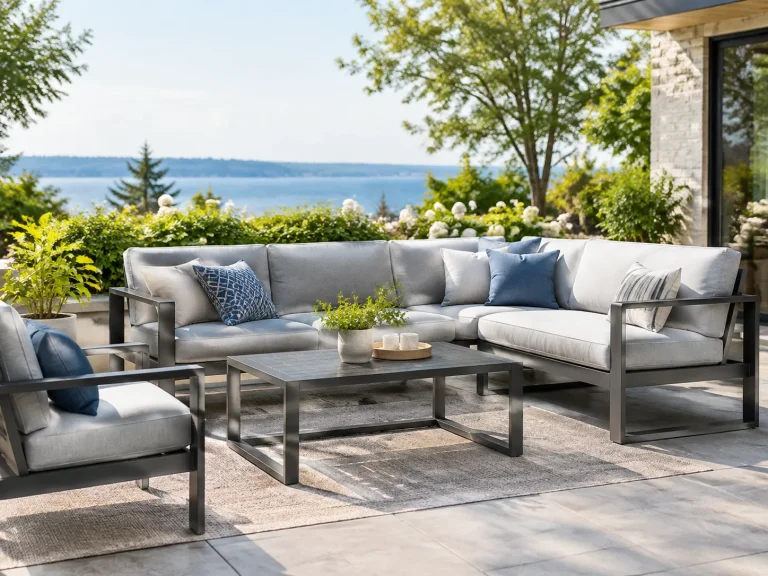
If you are styling a spacious patio layout, pairing these high-performance fabrics with a premium three-seats outdoor sofa ensures long-lasting comfort and durability against the elements.
The Stitching Detail: Marine-Grade Threads
A cushion’s durability depends on its weakest point, the seam. Ordinary sewing thread ages rapidly under strong UV radiation, causing the seams to crack and expose the foam underneath. Always use marine-grade, UV-resistant sewing thread to ensure your cushion remains intact even in the scorching coastal sun.
Space Planning for Seaside Outdoor Furniture
Living by the sea means your house layout must follow the laws of nature, not fight against them. When designing a balcony or terrace, wind resistance and unobstructed views are just as important as aesthetics.
Selecting Wind-Resistant Beach Furniture
Strong coastal winds can easily blow away lightweight furniture. To keep your furniture stable without sacrificing aesthetics, choose heavy furniture that can be secured itself.
- Weight Matters: Choose durable materials such as high-density polyethylene (HDPE) or high-density teak. An effective wind-resistant Adirondack chair or dining chair should weigh at least 35 pounds..
- Aerodynamic Profiles: The slatted backrest and open frame allow strong winds to pass directly through, rather than being blown around like a sail.
Maximizing Views with Elevated Seating
Standard-height chairs often leave you staring directly into a solid balcony railing rather than the ocean. Elevating your seating completely changes the experience. Combining strategic outdoor tables with matching bar or counter-height seating clears those sightline obstacles perfectly.
| Seating Style | Typical Seat Height | Best Used For |
| Standard Dining | 18 to 20 inches | Enclosed patios, ground-level decks |
| Counter Height | 24 to 26 inches | Low-profile railings, casual poolside lounging |
| Bar Height | 30 to 32 inches | Solid balcony railings, maximizing unobstructed ocean views |
For balconies with limited space, choosing suitable bar stools paired with narrow-sided tables can reduce the floor space occupied while maintaining an open view.
Multi-Functional Designs for Storm Prep
Seaside outdoor furniture needs to be highly adaptable, especially when severe weather or hurricane season rolls around.
- Foldable & Stackable Frames: Look for high-quality dining chairs and loungers that fold flat or stack tightly for quick storage in a garage or shed.
- Built-in Cushion Storage: Use weather-resistant benches or storage boxes with airtight seals to keep your cushions dry during sudden downpours.
Curating the Beach House Porch Decor Palette
Our signature coastal style features sophisticated and easy-to-maintain color schemes that complement, rather than clash with, the natural landscape.
- Base Neutrals: The main frame is made of sand brown, pure white and weathered gray to cover salt dust and sunlight glare.
- Accents: The cushions and accessories layered with shades of sea glass blue, deep navy blue, and soft green to echo the ocean’s hues.
Low-Maintenance Pro-Tips: Extending the Life of Your Coastal Outdoor Furniture
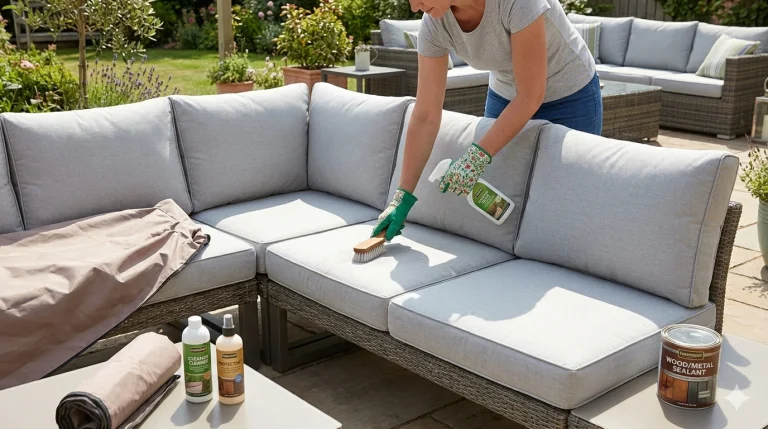
Even the highest quality seaside outdoor furniture requires a basic care routine to fight off the relentless coastal elements. Investing a few minutes into regular upkeep protects your property and ensures your low-maintenance coastal furniture keeps its premium look for years.
The Power of the Fresh-Water Rinse
Salt crust is the biggest enemy of extending service life. It locks in moisture and accelerates the wear and tear on surface coatings and hardware.
- Skip the Chemicals: Strong chemical cleaners can peel off the protective UV shielding layer and damage the surface coating.
- The Weekly Hose-Down: A simple weekly spray with fresh water from a garden hose is the single most effective way to remove salt buildup and sand abrasion.
- Drying: Let the frames air dry naturally in the sun after rinsing.
Routine Hardware Inspections
Strong winds and daily use can gradually cause the structural joints of terrace furniture to loosen over time.
- Check Fasteners: Every few months, take a moment to inspect the screws and joints.
- Tighten Periodically: Ensure all hardware remains snug to prevent structural wobbles during high-wind events.
- Check for Bleeding: Catching any early signs of hardware wear prevents rust stains from ruining your deck or patio flooring.
Smart Off-Season Protection
When severe storms roll in or the property sits empty during the off-season, proper storage guards your investment.
- Use Breathable Covers: Invest in high-performance, breathable furniture covers that prevent moisture buildup and mold growth underneath.
- Secure the Sets: During hurricane season, secure or store lighter items indoors to prevent damage from wind.
- Explore Our Collection: If you’re looking to upgrade your patio with durable, weatherproof furniture, browse our full range of durable outdoor furniture designed to withstand harsh coastal climates.