
Aluminum vs Steel Outdoor Furniture: Which Lasts Longer?
When you’re investing in outdoor furniture, the material you choose determines everything: how long it lasts, how much maintenance it needs, and how comfortable your outdoor space feels. The two most popular metal options — aluminum outdoor furniture and steel outdoor furniture — each have loyal followings, but they perform very differently when exposed to sun, rain, and salt air.
In this guide, we’ll compare aluminum vs steel furniture across five critical factors: rust resistance, weight, durability, price, and maintenance. By the end, you’ll know exactly which material fits your climate, budget, and lifestyle — and which one truly lasts longer in the great outdoors.
The Quick Answer
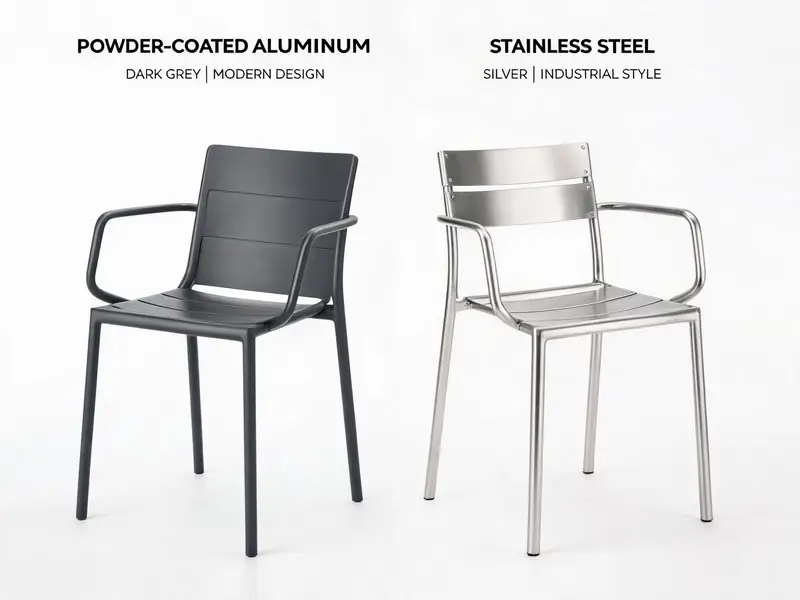
For most outdoor environments, aluminum outdoor furniture lasts longer than steel. Aluminum is naturally rustproof, lightweight, and requires almost no maintenance — typically lasting 15-25+ years. Steel is stronger, heavier, and more affordable upfront, but it’s prone to rust and lasts 5-15 years (carbon steel) or 10-20 years (stainless steel) depending on the grade and coating.
Choose aluminum if: you live in a humid, coastal, or rainy climate and want low-maintenance, rustproof outdoor furniture.
Choose steel if: you need heavy, wind-resistant furniture for a dry climate and want maximum strength at a lower price.
Factor 1: Rust Resistance — The Dealbreaker
When it comes to outdoor furniture, rust is enemy number one. This is where the aluminum vs steel outdoor furniture debate gets decisive.
Aluminum: Naturally Rustproof
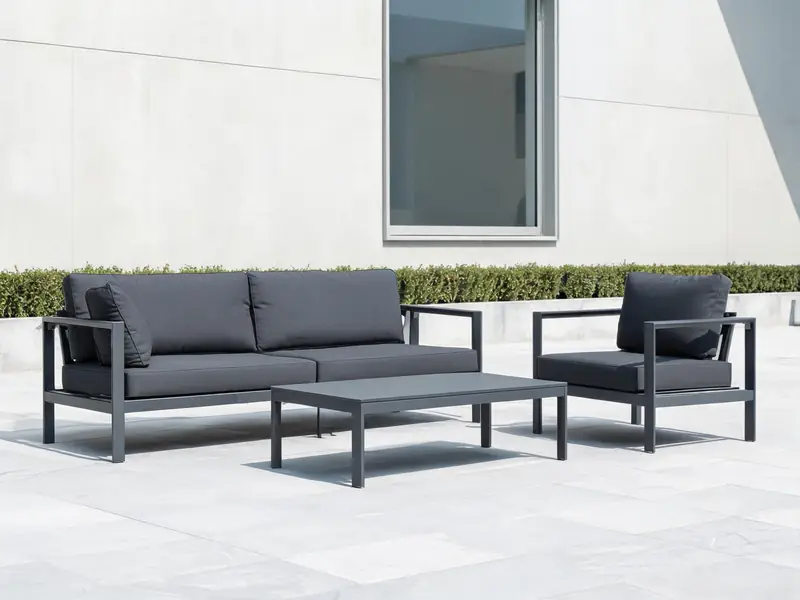
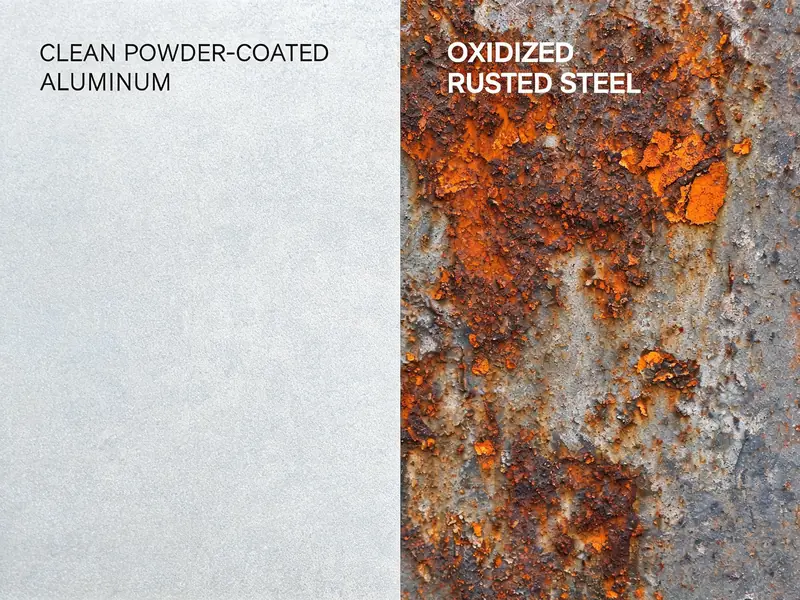
Aluminum is inherently rustproof. When exposed to oxygen, aluminum forms a microscopic oxide layer that actually protects the metal underneath from further corrosion. This means even if the powder coating chips or scratches, the exposed aluminum won’t rust — it may oxidize slightly (appearing as a white powder), but this doesn’t compromise structural integrity.
This is why aluminum outdoor furniture is the top recommendation for coastal areas, humid climates, and regions with heavy rainfall. If you’ve ever wondered how to choose outdoor furniture for coastal areas, aluminum is almost always the answer.
Steel: Rust-Prone Without Protection
Steel tells a different story. Carbon steel — the most common and affordable type — will rust when exposed to moisture and oxygen. No exceptions. The rust process eats through the metal, weakening the frame from the inside out.
Stainless steel fares better. It contains chromium (at least 10.5%), which forms a passive protective layer similar to aluminum’s oxide coating. However, lower-grade stainless steel (like 201 grade) can still develop surface rust in salt-heavy environments. Only higher grades (304, 316) offer true corrosion resistance.
Powder-coated carbon steel sits in the middle. The coating seals the steel from moisture, but once it chips or scratches, rust begins at the exposed point and spreads underneath the coating — often invisibly until it’s too late.
| Rust Resistance Factor | Aluminum | Carbon Steel | Stainless Steel |
|---|---|---|---|
| Naturally rustproof | Yes | No | Mostly (depends on grade) |
| Survives coastal/salt air | Yes | No | 304/316 grade only |
| Rusts if coating chips | No | Yes, rapidly | No |
| Lifespan in humid climate | 20-25+ years | 3-7 years | 10-20 years |
For a deeper dive into the coating process that gives aluminum its durability, read our guide on powder-coated aluminum vs stainless steel outdoor furniture.
Factor 2: Weight and Portability
Aluminum weighs about one-third as much as steel by volume. This dramatic difference affects how you use your furniture day-to-day.
Aluminum: Lightweight and Easy to Move
A typical aluminum patio chair weighs 4-8 kg (9-18 lbs). You can easily rearrange your furniture for a party, move chairs to follow the shade, or bring cushions inside before a storm. This flexibility is especially valuable for small patios and balconies where you may need to reconfigure frequently.
The downside? In windy areas, lightweight aluminum furniture can blow over or even blow away. If you live in a region with strong winds, you’ll need to either choose heavier cast aluminum designs or secure your furniture with anchors.
Steel: Heavy and Stable
A comparable steel chair weighs 10-18 kg (22-40 lbs). This heft is a double-edged sword. On one hand, steel furniture stays put in strong winds and feels more solid and substantial. On the other hand, moving it requires genuine effort — and shipping costs are significantly higher.
For commercial settings like hotels and restaurants where furniture needs to stay in place, steel’s weight can be an advantage. Learn more about commercial outdoor furniture buying to see which material works best for B2B projects.
Factor 3: Strength and Load-Bearing Capacity
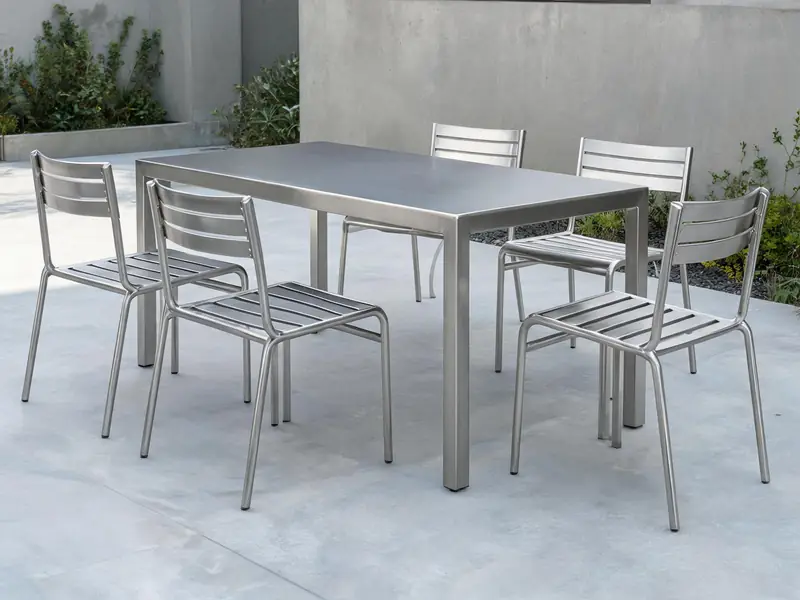
Steel is structurally stronger than aluminum. It has a higher tensile strength and can support more weight with thinner profiles. This means steel furniture can use slimmer, more elegant frame designs while still supporting heavy loads.
However, aluminum’s strength-to-weight ratio is excellent. Modern aluminum outdoor furniture uses thicker extrusions and reinforced joints to achieve load ratings of 150+ kg per seat — more than enough for any user. Cast aluminum, in particular, can be incredibly strong due to its solid (not hollow) construction.
For practical purposes, both materials are more than strong enough for residential and commercial seating. The difference matters most for:
- Dining tables holding heavy items — steel has the edge for large tabletops
- High-traffic commercial use — steel resists bending and denting better
- Poolside loungers — aluminum’s lighter weight is preferred for easy repositioning
Explore our range of outdoor chairs and outdoor tables to see both materials in action.
Factor 4: Price Comparison
Price is where steel has a clear advantage — at least initially. Here’s a realistic breakdown of what you can expect to pay for each material:
| Furniture Type | Aluminum Price Range | Steel Price Range | Price Difference |
|---|---|---|---|
| Dining chair (single) | $45 – $120 | $30 – $80 | Aluminum ~40% more |
| 4-seat dining set | $300 – $800 | $200 – $500 | Aluminum ~35% more |
| Lounge chair | $60 – $180 | $40 – $120 | Aluminum ~45% more |
| Sofa (3-seat) | $250 – $700 | $180 – $450 | Aluminum ~40% more |
Aluminum costs more upfront because the raw material is more expensive and the manufacturing process (extrusion, casting) requires specialized equipment. However, when you factor in longevity and maintenance costs, the total cost of ownership often favors aluminum.
Consider this: a $200 steel dining set might last 7 years before rust forces replacement ($28.57/year). A $350 aluminum set might last 20 years with minimal upkeep ($17.50/year). Over time, aluminum is actually cheaper per year of use.
If you’re buying for a business or bulk order, check out our OEM/ODM manufacturing services for factory-direct pricing on both aluminum and steel furniture.
Factor 5: Maintenance Requirements
Maintenance is where the two materials diverge most dramatically. Let’s break down what each material demands from you over its lifetime.
Aluminum Maintenance: Minimal
Aluminum Pros
- No rust — ever
- Won’t rot, warp, or crack
- Wash with soap and water
- UV-resistant powder coating
- Lightweight for easy cleaning
- 20+ year lifespan typical
Aluminum Cons
- Higher upfront cost
- Can blow over in strong winds
- May dent under heavy impact
- Fewer ornate designs available
- Aluminum oxidation (white powder) in rare cases
Maintaining aluminum furniture is almost effortless. Wash it with mild soap and water once or twice a season. That’s it. No rust treatment, no anti-corrosion spray, no annual repainting. The powder coating is UV-stable and typically lasts 10-15 years before fading becomes noticeable.
For tips on keeping your furniture in top shape, see our guides on how to clean outdoor furniture like a pro and how to maintain outdoor furniture to last 10+ years.
Steel Maintenance: Ongoing
Steel Pros
- Lower upfront cost
- Heavy and wind-resistant
- Exceptionally strong
- Wider design variety
- Can support heavier loads
- Industrial/modern aesthetic
Steel Cons
- Prone to rust (carbon steel)
- Requires regular maintenance
- Heavier and harder to move
- Coating needs touch-ups
- Higher shipping costs
- Shorter lifespan in wet climates
Steel furniture demands more attention. For carbon steel pieces, you need to:
- Inspect annually for chips, scratches, and rust spots
- Touch up coatings with matching paint or rust-inhibiting primer
- Apply rust preventative to exposed metal surfaces
- Store indoors during winter in snowy/icy climates
- Wash and dry thoroughly after rain exposure to prevent water pooling
Stainless steel requires less maintenance but still benefits from regular cleaning with stainless steel cleaner to maintain its protective chromium layer. In coastal areas, even stainless steel should be rinsed with fresh water monthly to remove salt deposits.
Side-by-Side Comparison Summary
| Feature | Aluminum | Steel (Carbon) | Steel (Stainless) |
|---|---|---|---|
| Rust resistance | Excellent | Poor | Good to Excellent |
| Weight | Lightweight (4-8 kg/chair) | Heavy (10-18 kg/chair) | Heavy (10-18 kg/chair) |
| Strength | Good | Excellent | Excellent |
| Lifespan | 15-25+ years | 5-15 years | 10-20 years |
| Maintenance | Minimal | High | Low to Moderate |
| Price (relative) | Medium-High | Low-Medium | High |
| Wind resistance | Low (may tip) | Excellent | Excellent |
| Best climate | Humid, coastal, rainy | Dry, temperate | Most climates |
| Comfort (heat) | Cool to touch | Can get hot | Can get hot |
| Eco-friendly | 100% recyclable | Recyclable | Recyclable |
Which Material Is Right for You?
Choose Aluminum If You:
- Live near the coast or in a humid climate
- Want furniture that lasts 20+ years with minimal effort
- Need to move or rearrange furniture regularly
- Have a residential patio, garden, or balcony
- Are willing to invest more upfront for long-term savings
Browse our complete garden furniture and patio furniture collections for aluminum options.
Choose Steel If You:
- Live in a dry, temperate climate with low humidity
- Need heavy, wind-proof furniture for an exposed location
- Are furnishing a commercial space with high traffic
- Have a tighter upfront budget
- Prefer an industrial or modern steel aesthetic
The Verdict: Aluminum Lasts Longer
After comparing all five factors, the answer to “which lasts longer?” is clear: aluminum outdoor furniture outlasts steel in nearly every outdoor environment. Its natural rustproof quality, minimal maintenance needs, and 15-25+ year lifespan make it the superior long-term investment for most buyers.
Steel wins on upfront price and raw strength, but its vulnerability to rust — especially in humid, coastal, or rainy climates — significantly shortens its outdoor lifespan. Even stainless steel, while more resistant, doesn’t match aluminum’s worry-free longevity.
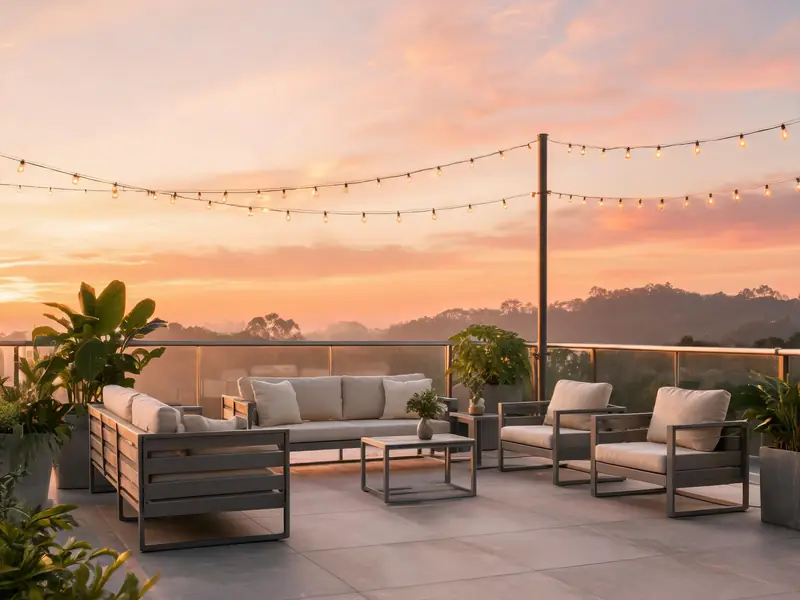
If you’re looking for rustproof outdoor furniture that will serve you for decades, aluminum is the clear winner. And if you want the best possible price on premium aluminum furniture, Hiway Trade manufactures directly at the factory level — no middlemen, no markups.
Get Factory-Direct Pricing on Aluminum Outdoor Furniture
Hiway Trade is a leading outdoor furniture manufacturer with 15+ years of experience. OEM/ODM, wholesale, and custom designs available. Free quotes within 48 hours.
Request Your Free QuoteFrequently Asked Questions
Does aluminum outdoor furniture rust?
Does steel outdoor furniture rust?
Which is lighter, aluminum or steel outdoor furniture?
Is aluminum or steel furniture better for windy areas?
How long does aluminum vs steel outdoor furniture last?
Can I leave aluminum furniture outside year-round?
Still have questions? Contact our team — we’re happy to help you choose the right material for your specific climate and needs. For more furniture tips, visit our blog or learn more about Hiway Trade.