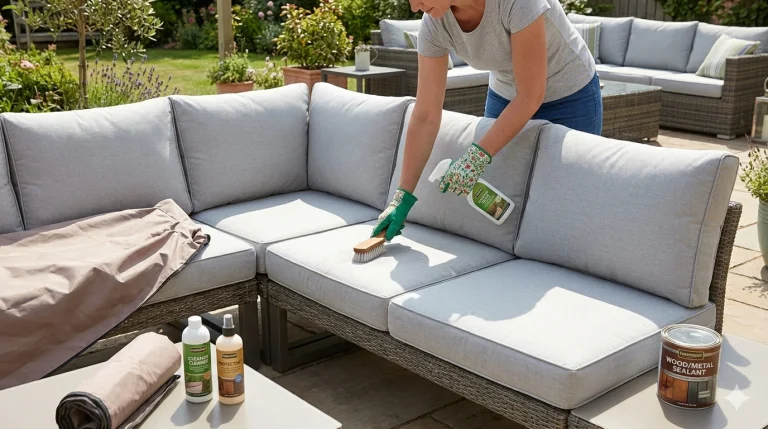

Why Winterizing Your Outdoor Sofa Is Essential
Cold weather can be hard on any outdoor sofa. Frost, rain, snow, and trapped moisture can weaken materials, stain surfaces, and shorten the life of your furniture. For quality outdoor sofa collections made with powder-coated aluminum, natural wood, or wicker, winterizing is not optional—it is basic protection. A simple care routine helps keep the frame stable, the finish clean, and the seating ready for the next season.
Preventing Freeze-Thaw Damage, Mold, and Rust
When moisture gets into seams, joints, cushions, or woven surfaces, repeated freezing and thawing can cause stress and surface damage. That is especially important for wood and wicker, where moisture control supports better weatherproofing wood and synthetic rattan care. It also helps reduce mold and mildew prevention issues in cushions and covers. For metal frames, even weather-resistant construction should still be kept clean and dry to limit rust buildup and protect long-term use.
Extending the Lifespan of Patio Furniture Materials
Winter care protects the finish, structure, and comfort of your patio furniture materials. Regular cleaning, drying, and proper storage help maintain the look and strength of powder-coated aluminum, natural wood, and woven designs. This is the most practical way to extend service life, reduce repair needs, and keep your outdoor sofa looking refined through changing seasons. For homeowners and commercial spaces alike, seasonal care supports better value over time.
Phase 1: Deep Cleaning and Drying Checklist
When I prepare an outdoor sofa for winter, I start with deep cleaning because dirt, moisture, and trapped debris make mold and mildew prevention harder later. A clean surface also helps protect quality outdoor sofa materials like powder-coated aluminum, natural wood, and wicker. For a simple step-by-step approach, I also keep our guide on how to clean and protect outdoor furniture like a pro in mind.
1. Clear Debris and Wash the Sofa Frame Thoroughly
I remove leaves, dust, and grit first, since loose debris can scratch the frame during cleaning.
- Brush off corners, seams, and connector points
- Wipe the frame with mild soapy water
- Rinse lightly and avoid soaking wood or woven areas
- Check for hidden dirt around joints and legs
For powder-coated aluminum, a gentle wipe-down is usually enough. For wood and wicker details, I keep the cleaning simple and avoid harsh scrubbing so the finish stays in good shape.
2. Deep Clean Outdoor Cushions and Cushion Covers
Cushions need more than a quick wipe. I always give them a real clean before storage.
- Shake out dust and dry debris
- Spot clean stains with a soft cloth
- Use a mild cleaner if needed
- Clean both the cushion surface and the covers
- Pay extra attention to seams where moisture can sit
This matters even more for indoor cushion storage later, because clean cushions are much less likely to trap odors, dampness, or mildew. Strong protective furniture covers work better when the cushions are already clean and dry.
3. Allow All Sofa Components to Dry Completely
Drying is the part people rush, and that is where problems start. I never store a sofa, cushion, or cover until every surface is fully dry.
- Leave frame parts in open air
- Stand cushions upright so air can move through them
- Turn pieces over if needed
- Make sure hidden spots are dry before covering or moving them
Full drying is a simple step, but it is one of the best ways to support mold and mildew prevention and keep the sofa ready for the next season.
Phase 2: Frame Maintenance and Surface Protection
I always treat the frame as the first line of defense. Once winter moisture gets into joints, corners, or worn spots, that is where damage starts. For outdoor sofas, good surface protection keeps the structure stable, helps with weatherproofing wood, and supports the long life of powder-coated aluminum, wicker, and other outdoor materials.
4. Seal Wood Frames with Protective Oil or Stain
For natural wood, I keep the surface clean, dry, and protected before the cold season sets in. That simple step helps reduce moisture absorption and surface wear.
- Wipe the frame with mild soapy water, then dry it fully.
- Check for rough spots, fading, or small cracks.
- Apply a suitable protective oil or stain for weatherproofing wood.
- Focus on exposed edges, joints, and any area that takes the most rain.
- For more wood-specific winter care, I follow the basics in winter care tips for outdoor wooden furniture.
5. Apply Anti-Rust Wax to Metal Sofa Frames
For metal frames, especially outdoor aluminum pieces, the goal is simple: keep the finish intact and stop moisture from sitting on the surface. Hiway’s weather-resistant, powder-coated aluminum is built for outdoor use, but basic care still matters.
- Clean the frame first and let it dry fully.
- Check corners, joints, and hardware for wear.
- Tighten loose bolts before winter storage or cover-up.
- Use a rust inhibitor only on exposed areas if the finish has been marked or damaged.
- Avoid abrasive pads that can scratch the coating.
6. Condition Synthetic Wicker and Outdoor Rope
For wicker-style surfaces, I keep the cleaning light and regular. That helps with synthetic rattan care and reduces buildup that can hold moisture through the winter.
- Brush off dust and debris before it settles into the weave.
- Clean with a soft cloth and mild soapy water.
- Dry the surface completely so moisture does not sit inside the weave.
- Inspect for loose strands or pressure points on the frame.
- If the sofa has woven details, I also make sure the structure is stored or covered in a way that supports mold and mildew prevention.
For buyers who like woven styles, wicker outdoor sofa designs are a good reminder that the look stays best when the surface is kept clean, dry, and protected.
Phase 3: Cushion and Fabric Winter Care
7. Spray Fabrics with Water and UV Protectant
I start with deep cleaning so no dirt gets trapped in the fibers, then I let every cushion and cover dry fully before treatment. A fabric-safe water and UV protectant helps with moisture resistance, color care, and basic winter wear control. For outdoor sofa cushions, this simple step supports mold and mildew prevention and keeps the fabric in better shape through damp, cold weather.
8. Store Cushions Indoors in a Dry Environment
After treatment, I move cushions into indoor cushion storage in a dry, ventilated space like a closet, cabinet, or utility room. I never pack them away wet, because trapped moisture leads to smell, mildew, and fabric damage. If I’m planning long-term care, I follow the same basic maintenance approach used in our guide to maintaining outdoor furniture for longer life and keep the cushions away from damp floors, sealed plastic, and cramped storage spaces.
Phase 4: Exterior Protection and Storage
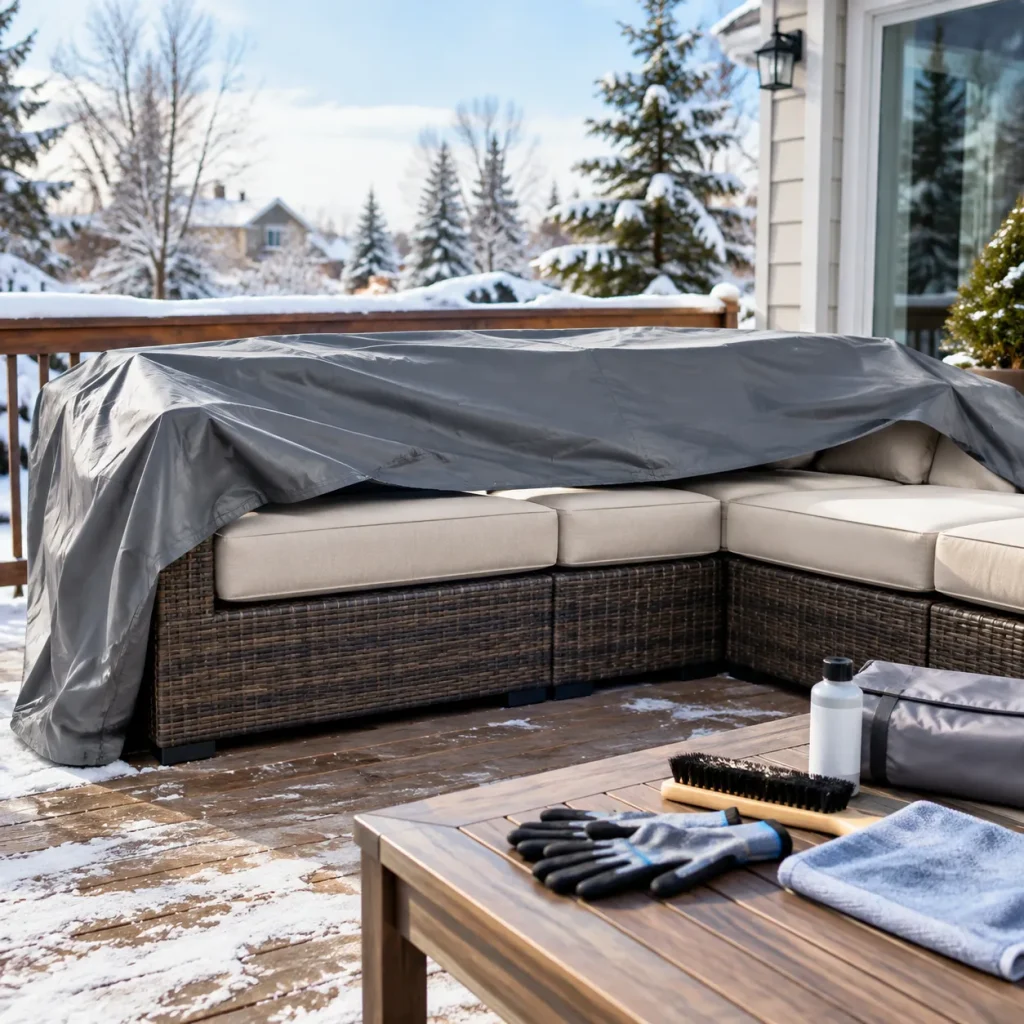
Once the sofa is clean and dry, I focus on keeping it off damp ground and shielding it from winter moisture. This step matters most for mold and mildew prevention, frame care, and keeping a quality outdoor sofa in good shape through the off-season.
9. Elevate Sofa Legs Off Wet Patio Surfaces
Wet patios, concrete, and stone can hold moisture for days. I keep sofa legs raised so the frame is not sitting in standing water or cold surface moisture.
- Use pads, risers, or a dry platform to lift the legs slightly.
- Check that the sofa sits level to avoid stress on one side.
- Recheck after heavy rain or snow so the base stays dry.
For modular layouts, I also make sure each section is stable and that any loose bolts are tightened before storage. That helps reduce shifting and keeps the structure steady.
10. Secure Fitted Waterproof Covers Over the Sofa
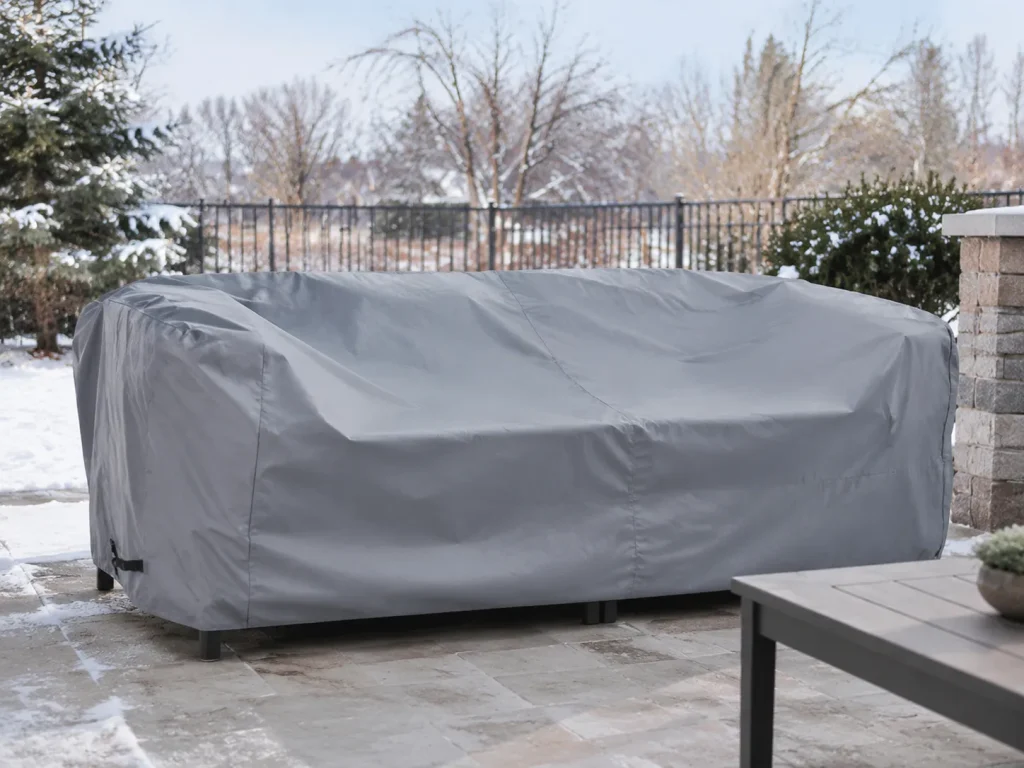
I use fitted protective furniture covers that match the sofa size closely. The goal is simple: block rain and snow while still allowing airflow. A breathable waterproof cover works better than a tight plastic wrap because it helps reduce trapped moisture.
- Choose a cover that fits snugly without squeezing the frame.
- Make sure the cover reaches low enough to protect the legs, but not so low that it traps water at the base.
- Leave small airflow gaps where the design allows, so condensation does not build up.
- Check the cover after wind or storms and secure it again if needed.
For outdoor sofas made with powder-coated aluminum, natural wood, or wicker-style finishes, this last layer of protection helps preserve the surface and keeps the sofa ready for the next season.
Best Winter Storage Options for Outdoor Sofas
When winter turns cold, wet, and windy, I treat outdoor sofa storage as a simple protection plan. The goal is to keep out moisture, stop mold and mildew, and avoid stress on the frame. For quality outdoor sofa care, the best option is always a dry indoor space first, then a proper outside cover plan if indoor storage is not possible.
Indoor Storage in a Garage, Shed, or Basement
Indoor storage is the safest choice for most outdoor sofas, especially sectional or three-seat setups. Before moving anything inside, I do a quick deep cleaning with mild soapy water, let every part dry fully, and check for loose bolts or weak joints.
| Storage Space | Best For | Key Point |
|---|---|---|
| Garage | Frames, cushions, modular sections | Keep items off the floor to reduce moisture contact |
| Shed | Smaller sofas and loose parts | Use dry, ventilated space only |
| Basement | Cushions and covers | Works best when the space stays dry and clean |
- Store cushions separately to support indoor cushion storage and mold prevention.
- Raise the sofa base with pallets or blocks so air can move under it.
- Cover with a breathable sheet, not a sealed plastic wrap.
- Keep hardware together if the sofa breaks down into sections.
Protecting Your Sofa Outside During the Off-Season
If I have to leave a sofa outdoors, I focus on weatherproofing the setup without trapping moisture. That means using breathable waterproof covers, keeping the frame off wet ground, and making sure snow does not sit on top for long. For wetter regions, I also plan around weather-resistant outdoor furniture sets for rainy climates so the sofa starts the season with better outdoor protection.
- Use fitted protective furniture covers that stay secure in wind.
- Leave airflow space under and around the sofa.
- Check the cover regularly for pooled water or snow buildup.
- Keep metal frames dry and watch for early rust spots.
Best choice by situation:
- Dry indoor room: best overall protection
- Garage or shed: strong backup option
- Outdoor storage: only with proper breathable waterproof covers and elevation