Tired of pulling off the covers in the spring only to find your patio set looking weathered, faded, or covered in grime? Figuring out exactly how to clean and protect outdoor furniture doesn’t require a professional, but grabbing the wrong bottle or tool can permanently damage your furniture. Let’s get straight to the prep work so you can tackle routine outdoor furniture maintenance the right way.

Essential Prep: What Should You Do When You Want To Clean Outdoor Furniture
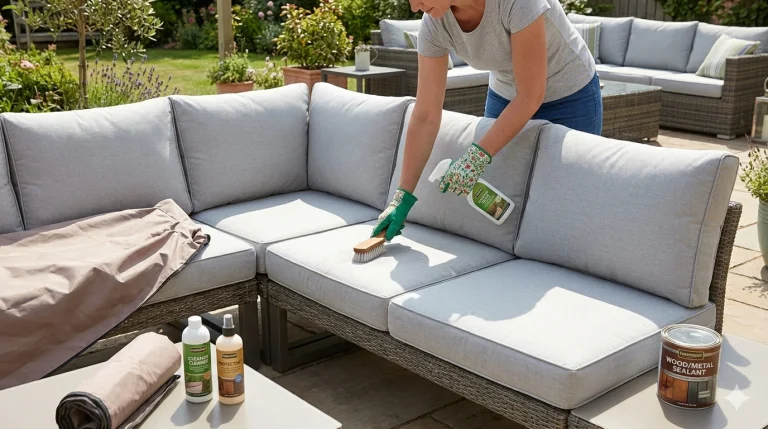
Before you start cleaning, you need the right tools. I always recommend starting with a safe, reliable DIY patio furniture cleaner before you resort to spending money on heavy-duty industrial chemicals.
Gather Your Cleaning Supplies
Skip the harsh chemical aisle for now. You can build a highly effective, non-toxic cleaning kit using basic household staples:
- Mild Dish Soap: Your everyday go-to base for lifting surface dirt, tree sap, and grease.
- White Vinegar: The ultimate natural weapon to cut through stubborn mildew, mold spores, and hard water deposits.
- Baking Soda: A gentle abrasive perfect for safely scrubbing away tough, stuck-on stains without scratching smooth surfaces.
- Soft-Bristle Brushes and Microfiber Cloths: Essential for lifting dirt out of tight crevices without damaging the factory finish.
If you handle commercial patio furniture care or face extreme, years-old buildup, specialized commercial cleaners certainly have their place. Just verify that you purchase formulas explicitly rated for your exact material type.
The Golden Rule of Outdoor Furniture Maintenance
If you remember nothing else from this guide, but remember to do no harm. Aggressive cleaning tactics destroy protective coatings and compromise the structural integrity of your seating.
- Put Down the Pressure Washer: Blasting delicate resin wicker or natural wood with a high-pressure washer strips away sealants and splinters the material. Stick to a standard garden hose.
- Ban Harsh Bleach: Never apply harsh bleach to colored outdoor fabrics. It degrades the woven fibers and instantly destroys factory UV and fade resistance treatments.
- Test First: Always test any cleaning solution—even a gentle household mix—on a hidden spot underneath the furniture to guarantee it won’t cause unexpected discoloration.
Phase 1: How to Clean and Protect Outdoor Furniture by Material
Different materials demand different care routines. Here is exactly how I tackle the most common patio pieces to keep them looking fresh and structurally sound without causing accidental damage.
Teak and Hardwood Restoration
Natural wood requires a gentle touch. Aggressive cleaning can strip essential oils and ruin the finish.
- Brush Gently: Mix mild dish soap with warm water and apply it with a soft-bristle brush.
- Follow the Grain: Always scrub in the direction of the natural wood grain to lift dirt without scratching.
- Target Algae: To remove green algae or reverse heavy graying, skip the harsh bleach. Use a specialized wood cleaner to safely lift stains and prep the surface for sealing.
Aluminum Patio Furniture Care
Metal is incredibly durable but remains susceptible to the elements over time.
- Wash Down: Wipe down metal and aluminum frames using a non-abrasive sponge and soapy water. Avoid steel wool at all costs.
- Inspect for Damage: As you dry the frames, carefully check the joints, screws, and welded spots. Catching early signs of oxidation is the ultimate secret to effective rust prevention for metal furniture.
Clean Resin Wicker Furniture
Weather-resistant synthetics like resin and plastic easily trap dust, pollen, and debris in their tight patterns.
- Clear the Crevices: Use a vacuum with a soft brush attachment—or a dry detailing brush—to dislodge trapped dirt from the wicker weaves.
- Restore the Shine: Wash faded plastics and resin surfaces with a mild detergent. A thorough rinse with a standard garden hose is usually all it takes to restore their natural, vibrant shine.
Outdoor Fabric Cleaning
Cushions and upholstery take the hardest beating from daily use and morning dew. Proper fabric care is crucial if you want to maintain outdoor furniture to last 10 years.
- Check the Labels: First, separate your machine-washable cushion covers from the spot-clean-only materials.
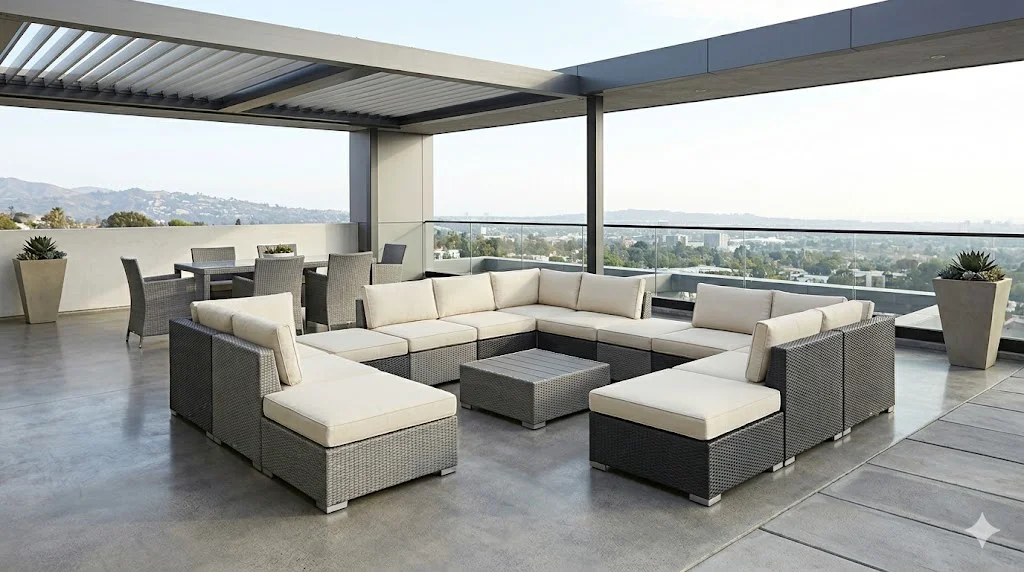
- Spot Clean: For structured pieces with non-removable upholstery, such as a premium single seat sofa, lightly dab stains with a sponge and a mild soapy solution. Do not saturate the foam.
- Air Dry Properly: Always stand wet cushions upright on their edges in an open, breezy area. Never put outdoor fabric covers in a machine dryer, as the heat will warp the material and destroy its water-resistant properties.
Stubborn Stains: Mold, Mildew, and Rust on Outdoor Furniture
We know that even with regular upkeep, tough stains happen. When figuring out how to clean and protect outdoor furniture, mold, mildew, and rust are the biggest hurdles. Here is how I handle them quickly and effectively.
Defeating Mold and Mildew
Damp weather inevitably brings fungal growth. To safely remove mold from patio cushions, fabrics, and hard surfaces, I rely on a simple DIY solution rather than harsh bleach.
- The Recipe: Mix a 1:1 ratio of plain white vinegar and warm water in a spray bottle.
- The Process: Saturate the affected area and let it sit for 15 to 20 minutes. The acidity naturally kills the spores.
- The Finish: Gently scrub the spot with a soft-bristle brush, rinse thoroughly with a hose, and air dry in direct sunlight.
This natural method is highly effective for restoring the fresh look of outdoor sofas without stripping the color or degrading the fabric fibers.
Stopping Rust in its Tracks
Catching oxidation early is the absolute core of rust prevention for metal furniture. If you spot small orange flakes on the joints of your steel or iron outdoor tables, you need to stop it before it eats deeper into the frame.
- Sand gently: Lightly buff the rusted spot with fine-grit sandpaper or a small wire brush until you reach bare, shiny metal.
- Wipe clean: Remove all metal dust and debris with a damp cloth and let the surface dry completely.
- Seal it: Apply a dab of rust-inhibiting metal primer, followed by a coat of exterior-grade touch-up paint to lock out future moisture.
Acting fast keeps surface rust from becoming a structural failure, keeping your metal sets solid for years to come.
Phase 3: Protecting Your Outdoor Furniture from the Elements
Cleaning is only half the job. To truly master outdoor furniture maintenance, you must shield your pieces from harsh weather. Here is how I lock in that fresh, clean look and extend the life of every patio set.
Sealants, Oils, and Waxes
Weatherproofing outdoor furniture requires the right topcoat for the right material. Don’t skip this step.
- Natural Wood & Teak: Apply a dedicated wood sealant or teak oil immediately after the furniture is clean and completely dry. This seals the grain, preserves the rich color, and prevents the wood from weathering to a dull gray.
- Metal Frames: I always use standard automotive wax on metal and aluminum frames. Wipe it on, let it haze, and buff it out. It creates a slick barrier that forces rainwater to bead right off, preventing moisture from sitting on the surface.
UV and Fade Resistance Treatment
The sun will ruin vibrant upholstery faster than a rainstorm. To protect patio sets from sun damage, you have to treat the fabrics proactively.
- Get a high-quality, fabric-safe protective aerosol spray.
- Apply an even coat over your dry outdoor cushions, pillows, and umbrellas.
- This creates an invisible shield that blocks harsh summer UV rays, acting as a highly effective UV and fade resistance treatment that keeps colors vibrant.
Shade Solutions: Awnings and Sunshades
Sometimes the best protection is a physical barrier. Installing premium outdoor awnings or permanent sunshades serves as your ultimate first line of defense. They block direct UV degradation and shield your seating area from heavy downpours. By creating a dedicated, shaded buffer zone, you drastically reduce the daily wear and tear on your outdoor furniture, keeping your entire setup looking brand new for years.
Seasonal Care: Winterize Outdoor Seating
When the cold weather rolls in, leaving your patio setup completely exposed is a quick way to ruin it. Proper outdoor furniture maintenance means taking the off-season seriously. Here is how I handle the drop in temperature to ensure everything survives until spring.
The Winterization Checklist
Before the first freeze hits, run through this quick checklist to prep your patio furniture for the off-season:
- Clean it completely: Never put away dirty furniture. Leftover grime traps moisture, which leads to winter mold and mildew.
- Dry it out: Wipe down every surface. Trapped water expands when it freezes, which causes cracking in both wood and plastic frames.
- Apply final protection: Give your metal frames a quick coat of wax and apply a final layer of sealant to your wood pieces.
To Store or to Cover
The easiest way to protect patio sets from winter storms and freezing temperatures is simply to bring them inside. If you have an empty shed, basement, or garage, use it. Lightweight pieces like aluminum dining armchairs or stackable sun loungers should always be moved indoors where the climate is controlled.
If you are short on indoor space or dealing with heavy cast iron tables, leaving them outside is fine—as long as you protect them properly.
- Invest in quality: Buy the best outdoor furniture covers you can find. Avoid cheap, basic plastic tarps because they trap moisture underneath.
- Focus on breathability: Look for heavy-duty covers that feature built-in vents. These keep the snow and freezing rain out but allow trapped condensation to safely escape.
- Secure them tightly: Use durable tie-downs, buckles, or heavy-duty drawstrings so harsh winter winds don’t blow your covers off in the middle of a storm.
FAQs: How to Clean and Protect Outdoor Furniture
I recommend a light surface cleaning once a month during your active season. You should also perform a thorough deep clean twice a year: once in the spring before heavy use, and again in the fall before winterizing. If your family regularly gathers around an extendable dining table for summer meals, give it a quick wipe down weekly to prevent food stains, bird droppings, and pollen buildup.
Generally, no. I strongly advise against using pressure washers for routine outdoor furniture maintenance. High pressure easily strips the natural finish off wood, blasts away protective metal sealants, and permanently damages woven resin wicker. Stick to a standard garden hose equipped with a gentle spray nozzle instead.
The most effective method for weatherproofing outdoor furniture fabrics is applying a dedicated, high-quality fabric protector spray.
Clean deeply first: Wash away all dirt or mildew and let the fabric air dry completely. Moisture trapped under a sealant will cause mold.
Spray evenly: Apply a specialized UV and fade resistance treatment spray across the entire surface in a well-ventilated area.
Focus on the seams: For large, plush seating arrangements like a sectional sofa, ensure you heavily coat the cushion seams and zippers where rainwater tends to pool and seep inside. Allow the fabric to cure fully before use.