Understanding Outdoor Sofas and Outdoor Sectionals
Selecting the right patio furniture sets the foundation for outdoor relaxation and entertaining. Both outdoor sofas and modular sectionals offer exceptional comfort, but their structural designs serve distinctly different spatial and functional needs.
What Is a Traditional Outdoor Sofa?
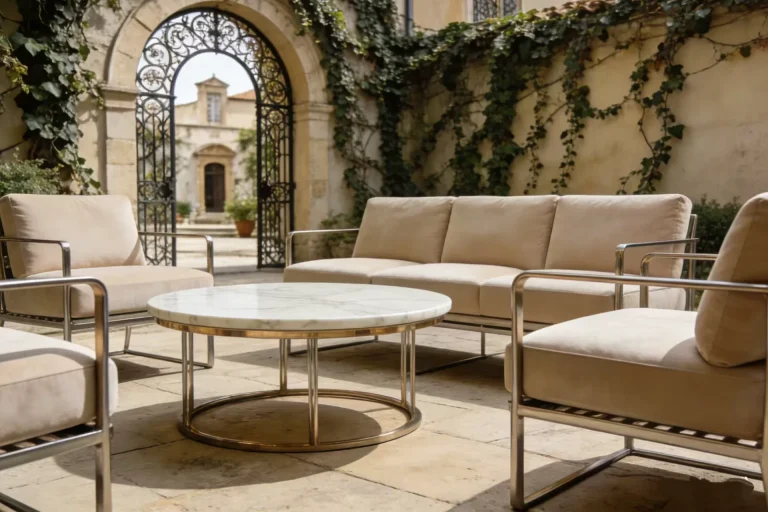
A traditional outdoor sofa is a single, fixed-frame seating unit designed to accommodate two to three people. Frequently paired with an outdoor loveseat or accent chairs to complete a classic conversation set, it features a static footprint built for structured environments.
- Fixed Structure: Non-configurable single unit with integrated armrests.
- Compact Footprint: Fits easily on narrow patios, small decks, and cozy porches.
- Classic Aesthetic: Delivers a symmetrical, timeless patio furniture layout.
What Is a Modular Outdoor Sectional?
A modular outdoor sectional consists of independent seating components—including corner chairs, armless units, and ottomans—that lock together seamlessly. As specialists in manufacturing high-performance outdoor sectionals, we engineer these modular seating systems for maximum spatial adaptability and expandable seating capacity.
- Customizable Layouts: Reconfigure effortlessly into L-shapes, U-shapes, or separate seating blocks.
- Scalable Capacity: Add or remove modules as your guest list or space requirements evolve.
- High Space Efficiency: Optimizes corner areas and large open-concept outdoor living spaces.
Key Differences in Design and Functionality
Evaluating structural differences ensures your choice matches your patio dimensions and daily entertaining style.
| Feature | Traditional Outdoor Sofa | Modular Outdoor Sectional |
|---|---|---|
| Frame Construction | Single fixed-piece frame | Interlocking individual modules |
| Configuration Flexibility | Static single layout | Unlimited layout options |
| Seating Capacity | Fixed (2–3 people) | Expandable (4–10+ people) |
| Ideal Spatial Layout | Defined, linear spaces & small decks | Open-concept patios & large backyard spaces |
| Mobility & Handling | Unitary weight, rigid dimensions | Lightweight pieces, easy relocation & storage |
Evaluating Space, Seating, and Flexibility (Factors 1–3)
1. Patio Dimensions and Space Requirements
When sizing up your layout, space efficiency is critical. Always leave at least 30 to 36 inches of clearance around your furniture for comfortable foot traffic.
- Outdoor Sofas: Ideal for narrow balconies, compact decks, and small suburban porches. They maintain an open feel without overwhelming your space. If you’re working with tighter square footage, review our recommended outdoor sofas for small patios and balconies to optimize tight footprints.
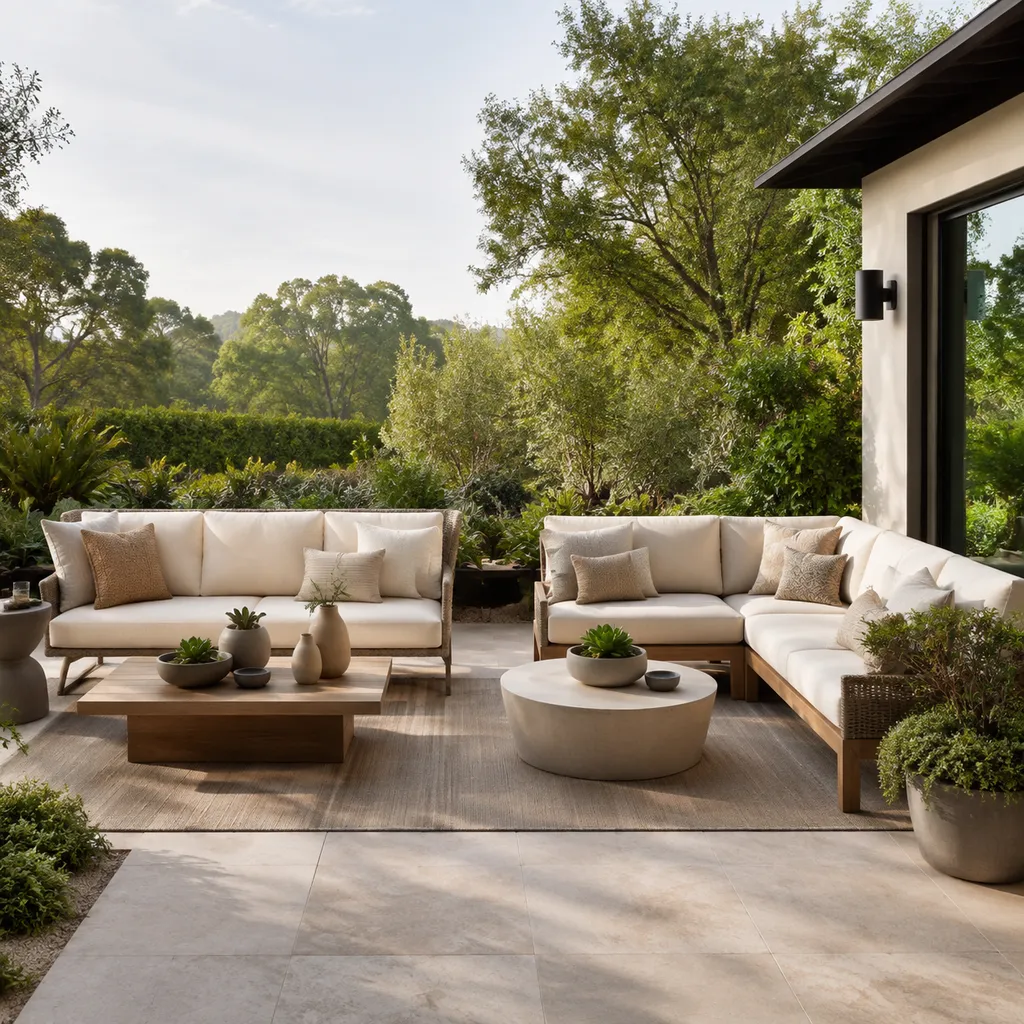
- Outdoor Sectionals: Require substantial patio dimensions, often needing an 8×8 foot corner or larger. They shine in wide-open backyards, around fire pits, or beside pool decks where they anchor large outdoor living rooms naturally.
2. Seating Capacity and Entertaining Needs
Your choice directly shapes how you host guests and utilize daily patio space. We compare the seating capacity and setup options below:
| Factor | Outdoor Sofa | Outdoor Sectional |
|---|---|---|
| Typical Seating | 2–3 adults | 5–8+ adults |
| Footprint | Compact & linear | Expansive L-shape or U-shape |
| Entertaining Style | Intimate, face-to-face paired with armchairs | Communal, open lounging for larger groups |
| Traffic Flow | High versatility; easy to move around | Dedicated corner anchor; defines zone boundaries |
A traditional sofa creates a centered focal point when paired with side chairs or a matching conversation set. In contrast, sectionals maximize corner real estate, giving everyone room to stretch out together without needing separate accent seats.
3. Modular Flexibility and Rearrangement Options
Adaptability matters when your hosting needs change between seasonal parties and quiet family afternoons.
- Fixed Sofas: Offer simple, stationary placement. Moving a single piece is lightweight and simple, but your layout remains permanently locked in one arrangement.
- Modular Sectionals: Deliver unmatched layout customization. As modular seating specialists, we build systems with integrated locking connectors, allowing you to split an L-shape into separate loveseats, add armless modules, or rearrange your setup in minutes.
If you prefer freedom to change your setup whenever guests arrive, modular seating provides the ultimate long-term versatility for growing outdoor spaces.
Evaluating Comfort, Maintenance, and Budget (Factors 4–6)
4. Cushion Comfort, Ergonomics, and Aesthetics
Choosing between an outdoor sofa and an outdoor sectional comes down to how you like to relax. A traditional sofa offers an upright, tailored silhouette that fits classic patio furniture layouts, while a sectional provides deep seating and chaise extensions built for stretching out.
- Outdoor Sofa: Upright back support, shallow-to-medium seat depth, and a structured, formal aesthetic.
- Outdoor Sectional: Deep lounging depth, daybed-style comfort, and an informal, relaxed atmosphere.
- Cushion Quality: Always prioritize high-density foam cores paired with solution-dyed fabrics to guarantee maximum cushion durability and fading resistance under direct sunlight.
5. Storage, Cleaning, and Off-Season Protection
Maintenance determines how well your garden furniture holds up over time. Larger modular sectionals take up more physical footprint, requiring multi-piece cover sets and more effort during winterization. Standard sofas are significantly easier to cover and store.
- Protective Covers: Sofas fit standard off-the-shelf covers easily. Sectionals require specialized, multi-segment covers to seal out moisture.
- Storage Footprint: Compact sofas store neatly in standard garages or sheds. Sectionals require considerable indoor space when stored off-season.
- Routine Care: You can drastically simplify maintenance by choosing resilient frame materials like low-maintenance aluminum patio furniture, which resists rust and wipes down in minutes.
6. Cost, Assembly, and Overall Long-Term Value
Upfront price tag is a major decision driver, but long-term value depends on seating density and overall construction quality.
- Upfront Cost: Outdoor sofas feature a lower initial price point, making them ideal for budget-conscious buyers. Sectionals cost more initially due to extra frames and cushions.
- Value Per Seat: Sectionals maximize seating capacity per square foot, often costing less per seat than purchasing a separate sofa, loveseat, and accent chairs.
- Assembly & Setup: Sofas arrive ready to use or with simple frame attachment. Sectionals require extra time to align interlocking module clips.
If you want to stretch your dollar, selecting affordable outdoor furniture with high-end style gives you maximum functionality, structural integrity, and visual appeal without overspending.
Pros and Cons Comparison
Choosing between an outdoor sofa and an outdoor sectional comes down to your space efficiency, entertaining style, and functional priorities.
Advantages and Disadvantages of Outdoor Sofas
Traditional outdoor sofas deliver classic styling and lightweight flexibility for compact patio dimensions. Pairing a standalone frame with armchairs or an outdoor loveseat creates a customizable conversation set that is easy to reconfigure, cover, or store during the off-season. Exploring top outdoor sofas that transform your patio highlights how these traditional designs maximize tighter garden furniture layouts.
| Outdoor Sofa Pros | Outdoor Sofa Cons |
|---|---|
| Compact Footprint: Fits small decks, balconies, and narrow spaces easily. | Limited Capacity: Holds fewer guests (typically 2 to 3 adults). |
| Easy Maintenance: Simpler to move, store, and cover winterized frames. | Restricted Lounging: Lacks integrated chaises for fully stretching out. |
| Flexible Styling: Mixes effortlessly with accent chairs and side tables. | Segmented Seating: Requires additional pieces for large social gatherings. |
Advantages and Disadvantages of Outdoor Sectionals
We specialize in manufacturing Outdoor Sectional units because modular seating provides the ultimate solution for spacious outdoor living areas. A sectional anchors an open deck, optimizes corner space, and keeps groups connected. Following proper guidance on how to choose the best outdoor furniture for your garden ensures you select frames with high weather resistance and cushion durability for larger setups.
| Outdoor Sectional Pros | Outdoor Sectional Cons |
|---|---|
| Maximum Capacity: Accommodates large families and groups effortlessly. | Large Footprint: Requires substantial patio space to avoid overcrowding. |
| Modular Layouts: Rearranges into various configurations for different events. | Storage Overhead: Requires bulkier weatherproof covers and storage space. |
| Lounge Comfort: Built-in chaises and deep seats encourage relaxation. | Higher Investment: Larger overall footprint means higher upfront costs. |
Choosing Weather-Resistant Materials for Your Climate
The longevity of your patio furniture depends directly on matching frame and fabric materials to your regional weather. Selecting materials designed to withstand UV rays, humidity, salt air, and sudden downpours ensures high performance season after season.
Durable Frame Materials: Teak, Aluminum, and Wicker
Frame selection determines structural integrity, overall weight, and long-term maintenance needs across different climate conditions.
- Powder-Coated Aluminum: The top choice for wet or coastal environments. Rustproof and lightweight, high-grade aluminum outdoor furniture sets handle intense moisture and salt air without degrading or staining patio surfaces.
- Natural Teak Wood: A dense hardwood rich in natural oils, making it inherently resistant to rot, moisture, and insect damage. Teak requires occasional oiling to maintain its golden hue; otherwise, it naturally patinas into a silvery-gray finish.
- HDPE Synthetic Wicker: High-Density Polyethylene (HDPE) resin wicker woven around metal frames outperforms standard PVC. It resists cracking, sagging, and UV fading under heavy sun exposure.
| Material | Best Climate Match | Rust/Rot Resistance | Maintenance Level |
|---|---|---|---|
| Aluminum | Coastal, Rainy, Humid | High (Rustproof) | Minimal |
| Teak Wood | Arid, Temperate | High (Natural Oils) | Moderate |
| HDPE Wicker | Sun-Drenched, All-Weather | High (Synthetic Resin) | Low |
All-Weather Fabrics and Cushion Foam Quality
Frame durability is only half the equation; cushion durability defines your daily comfort and overall furniture life.
- Solution-Dyed Acrylic Fabrics: Color pigments are embedded directly into the fiber core during production rather than printed on top. This prevents intense sunlight from bleaching the fabric while offering natural water and stain repellency.
- Open-Cell Quick-Dry Foam: Standard foam acts like a sponge, trapping water and causing mildew. Open-cell reticulated foam features a porous structure that lets water drain straight through within minutes after a storm.
Combining UV-stable textiles with quick-draining core layers creates reliable weather-resistant outdoor furniture sets for rainy climates, keeping your modular seating fresh, dry, and ready for use shortly after heavy downpours.
How to Choose: Which Furniture Option Is Right for You?
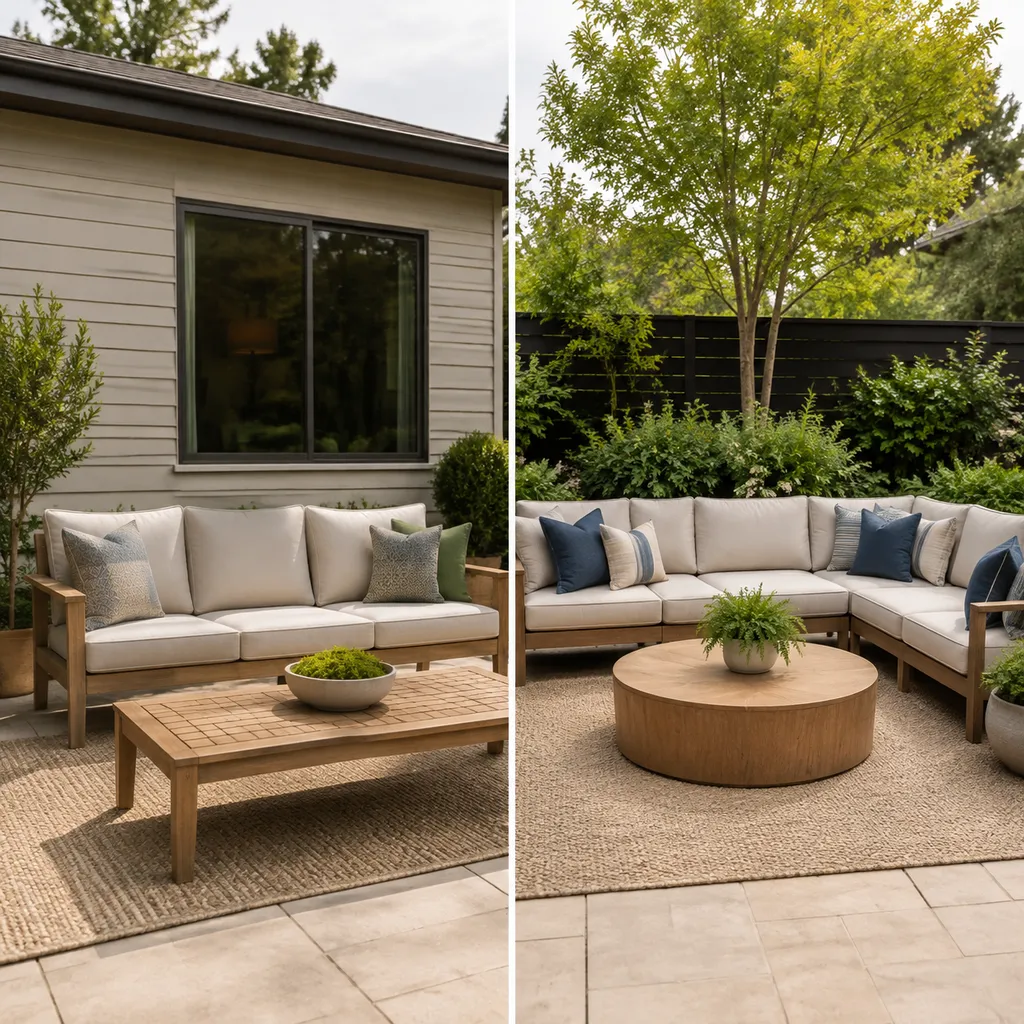
Matching your outdoor space with your entertainment style comes down to footprint, budget, and daily usage. Always take time to assess your patio footprint and lifestyle before making a final investment in your layout.
| Quick Decision Guide | Traditional Outdoor Sofa | Modular Outdoor Sectional |
|---|---|---|
| Best For | Small patios, narrow decks, balconies | Large backyards, open decks, poolside areas |
| Seating Capacity | 2 to 3 adults | 5 to 8+ adults |
| Layout Flexibility | Fixed design; easy to move entirely | Reconfigurable modular seating blocks |
| Storage & Care | Simple covers, easier winter storage | Larger footprint, custom weatherproof covers needed |
When to Choose an Outdoor Sofa
An outdoor sofa or paired outdoor loveseat works best for classic layout arrangements and compact environments. Knowing how to choose an outdoor sofa helps maximize space efficiency and keeps upkeep simple.
- Compact Patio Dimensions: Fits neatly on smaller balconies, urban decks, or narrow porches without blocking walkways.
- Balanced Conversation Set: Pairs seamlessly with side chairs and a coffee table for flexible conversation areas.
- Easier Winter Storage: Lighter weight makes moving, storing, and covering individual pieces effortless.
- Budget-Friendly: Provides high quality and lower upfront costs when seating smaller groups.
When to Choose an Outdoor Sectional
A modular sectional provides maximum seating capacity and flexibility for larger garden furniture setups and active hosts.
- Large Entertaining Needs: Accommodates big families and large groups in a unified, cozy gathering space.
- Adaptable Layouts: Customizes into L-shapes, U-shapes, or separate seating units to fit any event layout.
- Corner Utilization: Fills unused patio corners efficiently while creating an inviting lounge anchor.
- Deep Lounging: Offers expansive chaise sections to stretch out and relax comfortably outdoors.
Care and Seasonal Protection Tips
Routine Cleaning and Material Care
Whether you select a standalone outdoor sofa or an outdoor sectional, regular upkeep preserves frame structural integrity and fabric vibrancy for years. We recommend wiping down aluminum and synthetic wicker frames weekly using mild soap and fresh water. For deep fabric care, brush away loose dirt before spot-cleaning cushion covers with a soft-bristle brush. Understanding how to maintain outdoor furniture to last 10 years keeps all-weather fabrics and cushion durability at peak performance without demanding heavy labor.
- Metal & Resin Frames: Hose down frames bi-weekly to prevent pollen, dust, and salt air buildup.
- Cushion Airflow: Store deep-seating cushions vertically on their edges during unexpected downpours to accelerate drainage.
- Spill Removal: Blot liquid spills instantly with warm water and mild detergent; avoid harsh abrasive chemicals.
Weatherproof Covering and Off-Season Storage Solutions
Protecting patio furniture from severe freeze-thaw cycles and UV degradation doubles its functional lifespan. Invest in heavy-duty, breathable, UV-resistant covers equipped with secure tie-down straps to prevent wind lift.
- Modular Setup Coverings: Separate individual modular seating units slightly under large covers to eliminate moisture traps in tight joints.
- Off-Season Storage: Store high-density cushions indoors and move light metal frames to a dry garage, shed, or basement over extreme winter months.
- Wood Maintenance: Follow our dedicated winter care tips for outdoor wooden furniture to shield natural timber frames against cracking, warping, and moisture decay during frozen weather.