FOB vs CIF vs DDP: Outdoor Furniture Shipping Terms Explained for Buyers
Choosing the wrong shipping term when importing outdoor furniture from China can erase your profit margin before the container even reaches your warehouse. Incoterms define who pays for freight, insurance, customs, and inland delivery. However, many B2B buyers treat these three-letter codes as an afterthought during price negotiation. Consequently, unexpected charges pile up at the destination port, turning a competitive quote into a budget disaster.
This guide breaks down FOB, CIF, and DDP specifically for outdoor furniture imports. You will learn exactly what each term covers, how costs compare across a full container load, and which option matches your logistics experience and risk tolerance. By the end, you will negotiate shipping terms with the same confidence you apply to product pricing.
Key Takeaways
- FOB gives buyers maximum control over freight costs and carrier selection.
- CIF transfers risk earlier but often includes inflated freight markups.
- DDP offers door-to-door convenience at a 15-25% premium over FOB.
- Outdoor furniture buyers should verify insurance coverage under CIF before accepting quotes.
What Do FOB, CIF, and DDP Actually Mean?
Incoterms published by the International Chamber of Commerce standardize global trade responsibilities. For outdoor furniture shipped from Chinese factories to buyers worldwide, three terms dominate purchase orders. Each allocates costs, risks, and paperwork duties differently between exporter and importer.
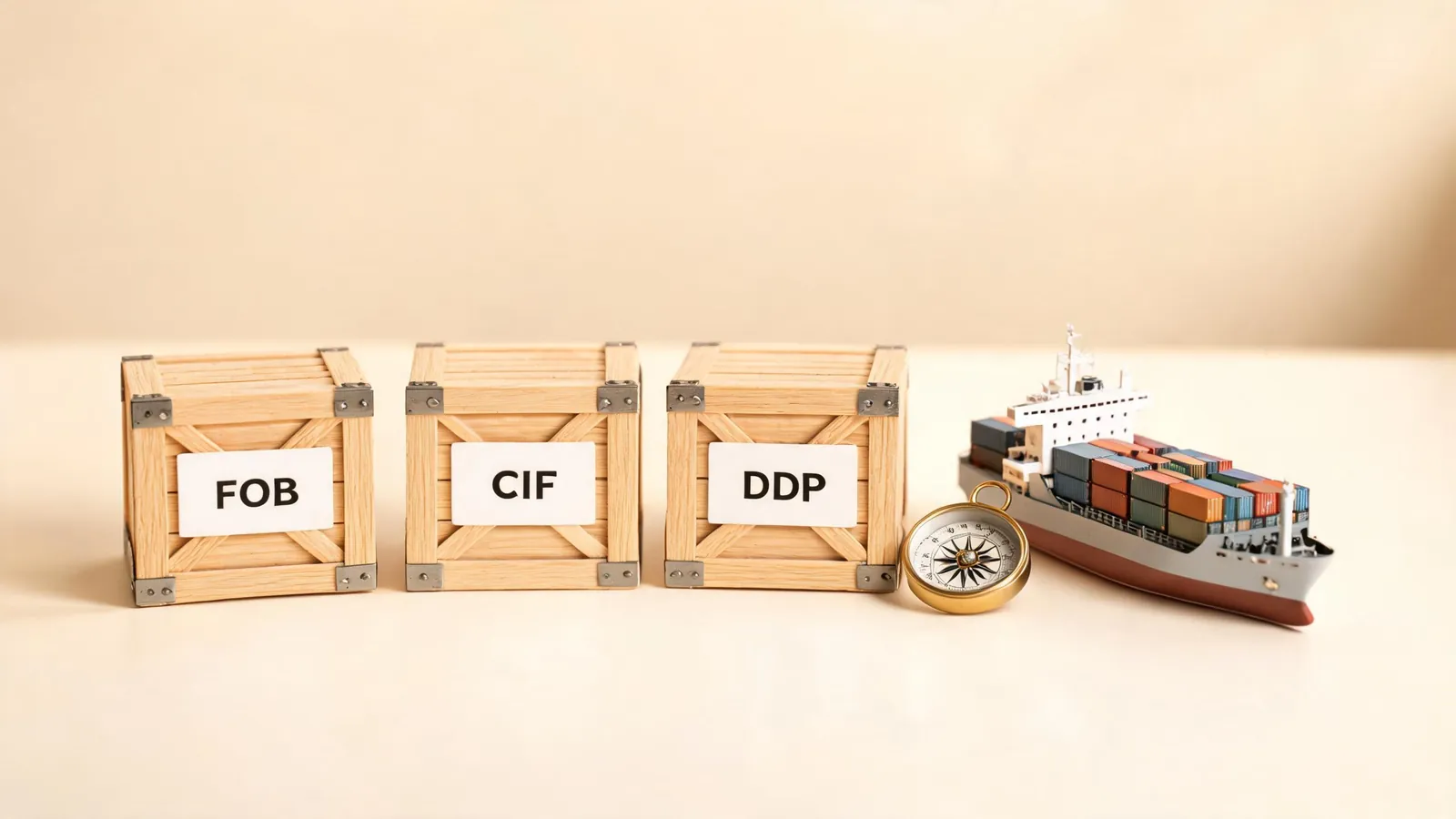
FOB (Free On Board)
Under FOB terms, the supplier delivers goods to the port of shipment, clears export customs, and loads the container onto the vessel. Risk transfers to the buyer once cargo passes the ship’s rail. From that point forward, the buyer assumes responsibility for ocean freight, marine insurance, destination customs, and inland trucking.
FOB suits buyers who maintain relationships with freight forwarders or logistics companies. Because you book shipping directly, you control carrier selection, sailing schedules, and final freight pricing. Additionally, FOB eliminates supplier markups on freight, which often range from 10 to 20 percent above market rates.
CIF (Cost, Insurance, and Freight)
CIF shifts more obligation to the supplier. The factory pays for goods, local export fees, ocean freight to your destination port, and minimum marine insurance. Risk technically transfers at the port of loading, yet the supplier arranges freight on your behalf. Upon arrival, you handle import customs, duties, taxes, and delivery from port to warehouse.
CIF appeals to buyers who prefer a single invoice covering product and freight. Nevertheless, this convenience carries hidden costs. Suppliers frequently choose the cheapest freight option with longer transit times, and the included insurance often meets only minimum requirements. Furthermore, CIF quotes obscure the true freight cost, making it harder to benchmark logistics spending.
DDP (Delivered Duty Paid)
DDP represents the maximum supplier obligation. The factory delivers goods to your specified address, paying every cost along the route: export clearance, ocean freight, marine insurance, destination customs, import duties, and inland delivery. You receive a landed price with no surprise invoices.
For buyers new to international trade, DDP removes complexity. You avoid navigating customs brokers, duty classifications, and port paperwork. On the other hand, DDP commands the highest product price because the supplier absorbs all logistics risk and administrative work. Moreover, not every Chinese furniture factory offers DDP, especially to destinations with complex import regulations.
Cost Comparison: FOB vs CIF vs DDP for Outdoor Furniture
Understanding theoretical definitions matters less than seeing real numbers. Below is a cost breakdown for a standard 40-foot container of outdoor sofas, chairs, and tables shipped from Ningbo, China to Hamburg, Germany.
| Cost Component | FOB | CIF | DDP |
|---|---|---|---|
| Product Value (EXW) | $25,000 | $25,000 | $25,000 |
| Export Customs & Local Haulage | Supplier | Supplier | Supplier |
| Ocean Freight (Ningbo-Hamburg) | $2,800 | Supplier | Supplier |
| Marine Insurance | $125 | Supplier | Supplier |
| Import Customs Clearance | $350 | $350 | Supplier |
| Import Duties & VAT (est. 22%) | $5,500 | $5,500 | Supplier |
| Inland Delivery to Warehouse | $600 | $600 | Supplier |
| Total Landed Cost (Buyer Paid) | $29,375 | $31,450* | $34,500* |
*CIF and DDP totals include estimated supplier markup on freight and logistics services. Actual quotes vary by factory and destination.
The table reveals a clear pattern. FOB delivers the lowest total cost for buyers who manage their own logistics. CIF adds roughly $2,000 through supplier freight markups and limited insurance. DDP commands the highest premium but eliminates administrative burden entirely.
Which Shipping Term Is Best for Outdoor Furniture Imports?
No single Incoterm suits every buyer. Your ideal choice depends on order volume, logistics experience, risk appetite, and how much time you can dedicate to shipment management. Consider the following scenarios before signing your next purchase order.
When to Choose FOB
FOB benefits buyers who import regularly and maintain forwarder relationships. If you ship multiple containers annually, negotiating freight rates directly with carriers or NVOCCs generates substantial savings. Additionally, FOB lets you consolidate shipments from multiple suppliers into one container, reducing per-unit shipping costs.
Choose FOB when you need control over sailing schedules. Outdoor furniture has seasonal demand peaks, and missing a two-week delivery window can cost retail opportunities. By booking freight yourself, you select departure dates that align with your inventory plans.
When to Choose CIF
CIF works for buyers placing occasional orders without dedicated logistics staff. If you import one or two containers yearly, the time savings from letting the supplier arrange freight may outweigh the markup. Furthermore, CIF simplifies cash flow because you pay product and freight together via a single wire transfer.
However, verify the supplier’s insurance coverage before accepting CIF terms. Minimum Institute Cargo Clauses C coverage excludes water damage and handling-related losses, both common risks for outdoor furniture with cushions and fabric components.
When to Choose DDP
DDP suits first-time importers entering unfamiliar markets. If you lack experience with European Union customs procedures or United States HTS code classifications, DDP shields you from compliance mistakes that delay shipments. Moreover, DDP provides predictable budgeting because the quoted price equals your actual cost.
Consider DDP for small trial orders below a full container load. LCL shipments involve more handling and documentation than FCL, making supplier-managed logistics attractive. Nevertheless, always confirm that the factory’s DDP quote includes all destination charges, including customs examination fees and warehouse storage.
Hidden Costs Buyers Often Miss
Shipping quotes rarely tell the complete story. Beyond the headline freight rate, several expenses catch outdoor furniture buyers off guard regardless of which Incoterm they select.
- Terminal handling charges (THC): Port fees for loading and unloading containers often appear as separate invoices. Under FOB, the supplier pays origin THC while you pay destination THC. CIF sometimes excludes destination THC from the supplier’s freight quote.
- Customs examination fees: Random inspections by customs authorities generate charges for container unpacking, inspection labor, and repacking. These fees fall on the buyer under FOB and CIF, yet some DDP agreements exclude them.
- Demurrage and detention: Containers not collected within free time accumulate daily charges. Demurrage applies while containers sit at the port; detention applies while containers remain at your facility. Both costs escalate quickly and can exceed $100 per day.
- Currency conversion margins: Suppliers quoting CIF or DDP in your local currency often embed unfavorable exchange rates. Therefore, request freight breakdowns in US dollars to benchmark against market rates.
- Insurance gaps: CIF includes minimal insurance that excludes partial damage. If a container of outdoor chairs arrives with scratched frames or water-stained cushions, basic coverage offers no compensation.
How Shipping Terms Affect Your Total Landed Cost
Landed cost determines whether your outdoor furniture business turns a profit. This figure combines product price, freight, insurance, duties, and ancillary fees divided by the number of units shipped. Consequently, a shipping term that looks cheaper upfront may increase landed cost through hidden charges.
FOB typically yields the lowest landed cost for experienced buyers. You control each cost component and can optimize individually. For example, booking freight during low-season shipping months reduces ocean rates by 15 to 30 percent. Similarly, arranging your own insurance through a broker often costs 40 percent less than supplier-provided coverage.
CIF raises landed cost through supplier markups, but the increase is predictable. You sacrifice some cost control for administrative simplicity. If your team lacks bandwidth to manage freight, the markup functions as a logistics management fee.
DDP produces the highest landed cost but the lowest administrative overhead. The supplier prices in risk premiums for customs delays, duty calculation errors, and currency fluctuations. For buyers prioritizing certainty over cost optimization, this premium represents valid insurance against logistics surprises.
Practical Tips for Negotiating Shipping Terms
Negotiating Incoterms requires the same preparation as negotiating unit prices. Apply these tactics to secure terms that protect your margins and reduce operational headaches.
- Request freight breakdowns: Ask CIF and DDP suppliers to itemize freight, insurance, and destination charges separately. This transparency reveals markups and creates negotiation leverage.
- Benchmark freight rates: Contact two or three forwarders for FOB freight quotes before accepting CIF terms. If the supplier’s embedded freight exceeds market rates by more than 10 percent, negotiate or switch to FOB.
- Specify insurance coverage: For CIF shipments, demand Institute Cargo Clauses A coverage rather than minimum Clauses C. The upgrade typically costs under $200 for a full container but covers partial losses and handling damage.
- Clarify destination charges: Under CIF, confirm whether the supplier pays destination THC and documentation fees. Many factories quote CIF port-to-port, leaving terminal charges for the buyer.
- Document DDP exclusions: If choosing DDP, list excluded charges in the contract. Specifically address customs examination fees, demurrage caused by documentation errors, and storage during delivery delays.
- Align terms with payment schedules: FOB buyers often pay 30 percent deposit and 70 percent against bill of lading copy. CIF and DDP buyers may negotiate 30/70 or even 30/40/30 splits tied to production milestones.
Frequently Asked Questions
Shipping Term Basics
What is the best shipping term for first-time outdoor furniture buyers?
FOB is generally the best choice for first-time buyers because it offers a balance of control and cost transparency. You pay for the goods and local export costs, then arrange ocean freight with your own forwarder. This setup lets you track shipments directly and avoid hidden markups from suppliers. However, if you lack logistics experience, DDP may be worth the premium for door-to-door convenience.
Does CIF include customs clearance at the destination port?
No, CIF does not include destination customs clearance. Under CIF terms, the supplier covers freight and insurance to your port, but you remain responsible for import duties, customs clearance, and inland delivery. Many first-time buyers mistakenly assume CIF is door-to-door, which leads to unexpected costs at arrival.
Cost and Risk Questions
How much does DDP shipping add to outdoor furniture costs?
DDP typically adds 15 to 25 percent to the total product cost compared to FOB. The markup covers ocean freight, destination customs clearance, import duties, taxes, and inland delivery. For a 40-foot container of outdoor furniture valued at 25000 dollars, DDP may cost 3750 to 6250 dollars more than FOB.
Can I switch from CIF to FOB after placing an order?
Switching terms after order confirmation is possible but often expensive. Suppliers may charge administrative fees to cancel their freight booking, and you could face currency exchange losses on prepaid shipping. Therefore, negotiate the correct Incoterm before signing the purchase order.
What insurance coverage does CIF provide for outdoor furniture?
CIF requires the supplier to purchase minimum marine insurance covering 110 percent of the invoice value under Institute Cargo Clauses C. This basic coverage protects against major casualties like vessel sinking or fire, but excludes water damage, rough handling, and partial losses. Consequently, buyers should upgrade to Institute Cargo Clauses A for full protection, especially for high-value outdoor furniture.
Who pays for demurrage charges under FOB terms?
Under FOB, the buyer pays demurrage fees if containers sit at the destination port beyond the free time. Demurrage accumulates daily and can reach hundreds of dollars per container. To avoid surprises, coordinate with your customs broker before the vessel arrives and ensure all import documents are prepared in advance.
Get a Shipping-Included Quote for Your Next Order
Hiway Trade ships outdoor furniture globally under FOB, CIF, and DDP terms. Request a transparent freight breakdown and compare landed costs before you commit.
Request a Quote