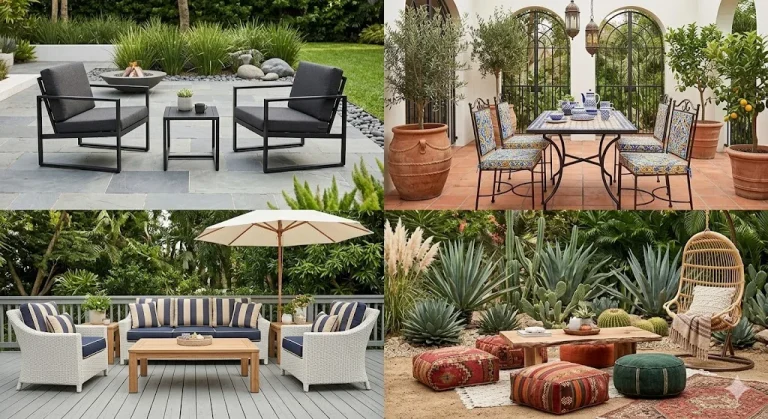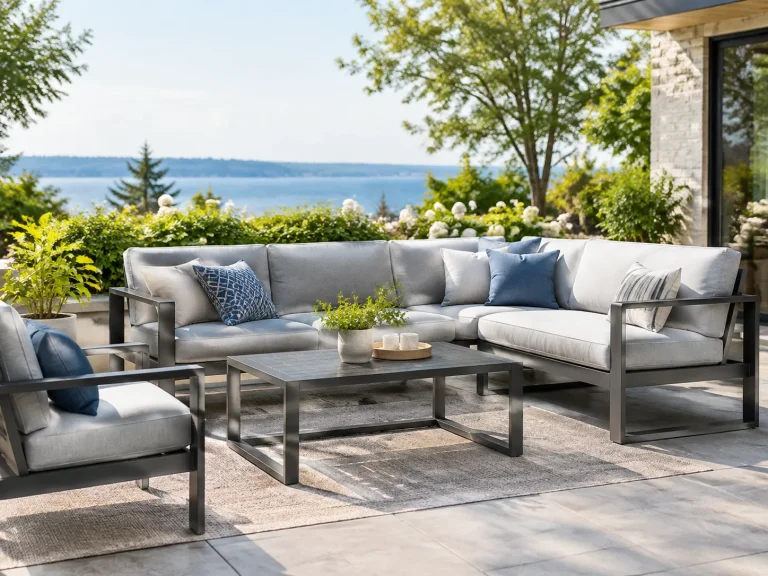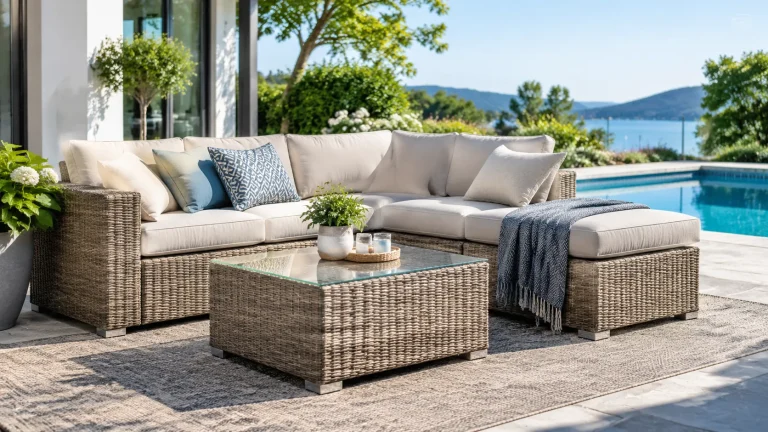
Choosing the right patio furniture often comes down to one question: which material can handle real outdoor use without losing its look or structure? For buyers in global markets, the main concerns are weather resistance, durability, maintenance, and long-term value. That is why teak outdoor sofas and synthetic wicker sofas remain two of the most common options.
Teak is a premium hardwood known for natural oils, dense grain, and strong longevity. Synthetic wicker is a popular outdoor weave that offers a lighter visual feel and a familiar modern style. Both can work well in outdoor settings, but they serve different priorities.
What Makes Teak Wood Premium Quality
Teak stands out because it is built for demanding outdoor conditions. Its natural oils help support weather resistance, while its dense grain adds strength and durability over time. For outdoor sofas, that means better performance in sun, rain, and coastal environments with less worry about early wear.
- Natural oils: help teak resist moisture more effectively.
- Dense grain: supports structural stability and longevity.
- Premium feel: adds warm, natural character to patio furniture.
Understanding All-Weather Synthetic Wicker
Synthetic wicker is designed to give outdoor furniture a woven look while staying suitable for exterior use. In commercial and residential spaces, it is often chosen for its style flexibility and lighter appearance. Quality synthetic wicker materials are made to handle outdoor exposure, but their long-term performance depends on the weave, frame, and overall build.
- Weather resistance: suited for everyday outdoor use.
- Flexible styling: works well in modern patio layouts.
- Material structure: performance depends on the quality of the synthetic weave and frame.
5 Reasons Teak Outdoor Sofas Are Worth More Than Wicker
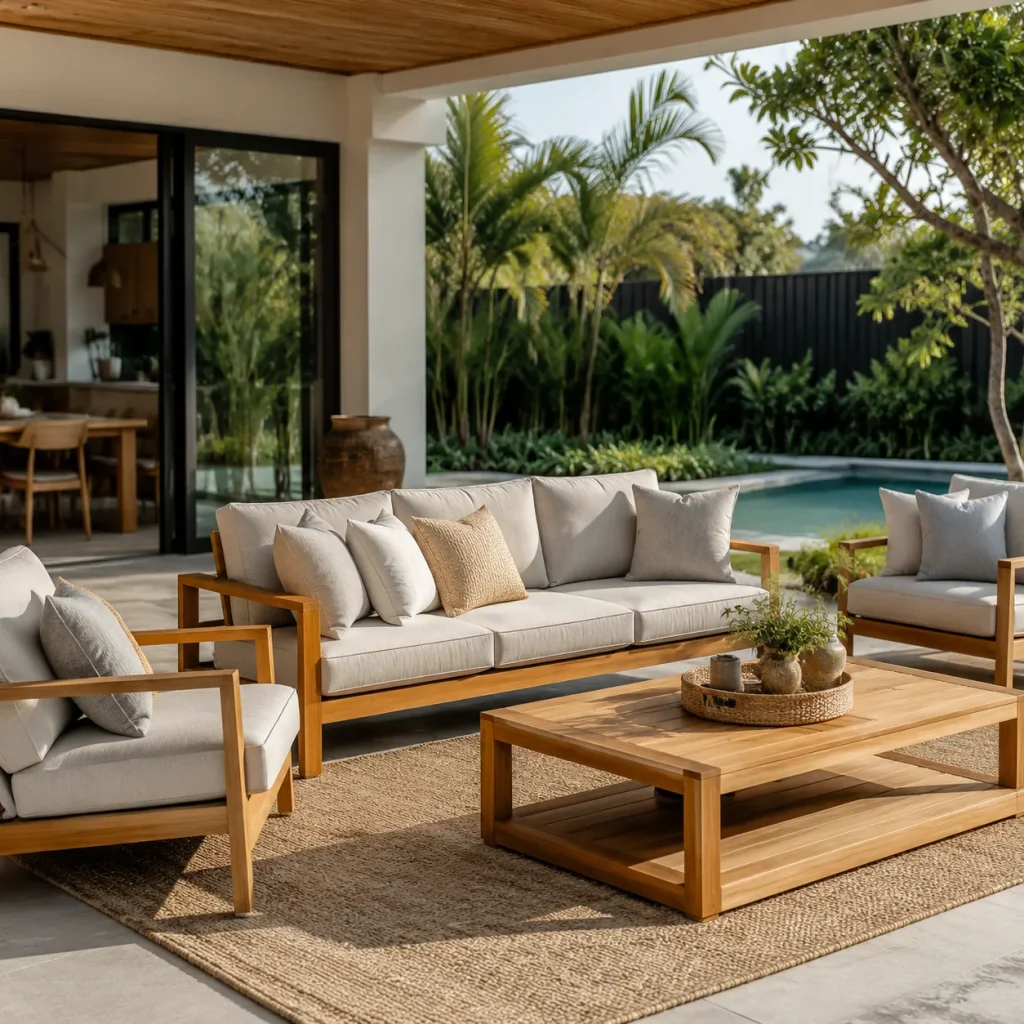
I build and source teak outdoor sofas for buyers who care about real service life, not just a lower starting price. When you compare Grade-A teak with HDPE wicker, the key difference is long-term durability. Teak is a natural hardwood with strong weather resistance, while wicker is a synthetic solution that can fit some spaces but usually follows a shorter replacement cycle. For patio furniture in homes, hotels, and commercial settings, that gap matters.
1. Multi-Decade Durability and Superior Lifespan
Teak has a dense grain structure that helps it hold up under heavy use. It is made for long-term outdoor performance, with the kind of durability buyers want for busy patios, resorts, and shared spaces. In practical terms, that means better longevity and fewer replacements over time.
2. Natural Oils and Inherent Weather Resistance
One of teak’s biggest strengths is its natural oil content. Those oils help the wood resist moisture and support weather resistance without relying on constant chemical sealing. That makes teak outdoor sofas a smart fit for sun, rain, and coastal conditions.
3. Superior Resistance to Pests, Moisture, and Rot
Teak is known for strong rot resistance because its natural structure helps repel moisture and reduce damage from insects. That is a major advantage when compared with synthetic wicker seating that can wear down faster in harsh outdoor use. For buyers who want less worry and fewer repairs, teak is the safer material.
4. Timeless Elegance and Graceful Patina Aging
Teak brings a warm, natural look that feels premium without trying too hard. Over time, it can weather into a silver-grey patina, or it can keep its golden tone with light oiling. That aging process gives teak outdoor sofas a refined finish that works across modern patios, garden layouts, and high-end outdoor furniture collections.
5. Higher Long-Term Return on Investment and Resale Value
Teak usually costs more upfront, but the value shows up over time through lower maintenance needs, stronger durability, and longer use life. That is why I see teak as a better investment value for buyers who want dependable outdoor seating that stays useful for years. For commercial buyers, the outdoor furniture buying guide for hotels and resorts is a useful way to think about long-term purchasing decisions.
Teak vs. Wicker: Detailed Comparison Factors
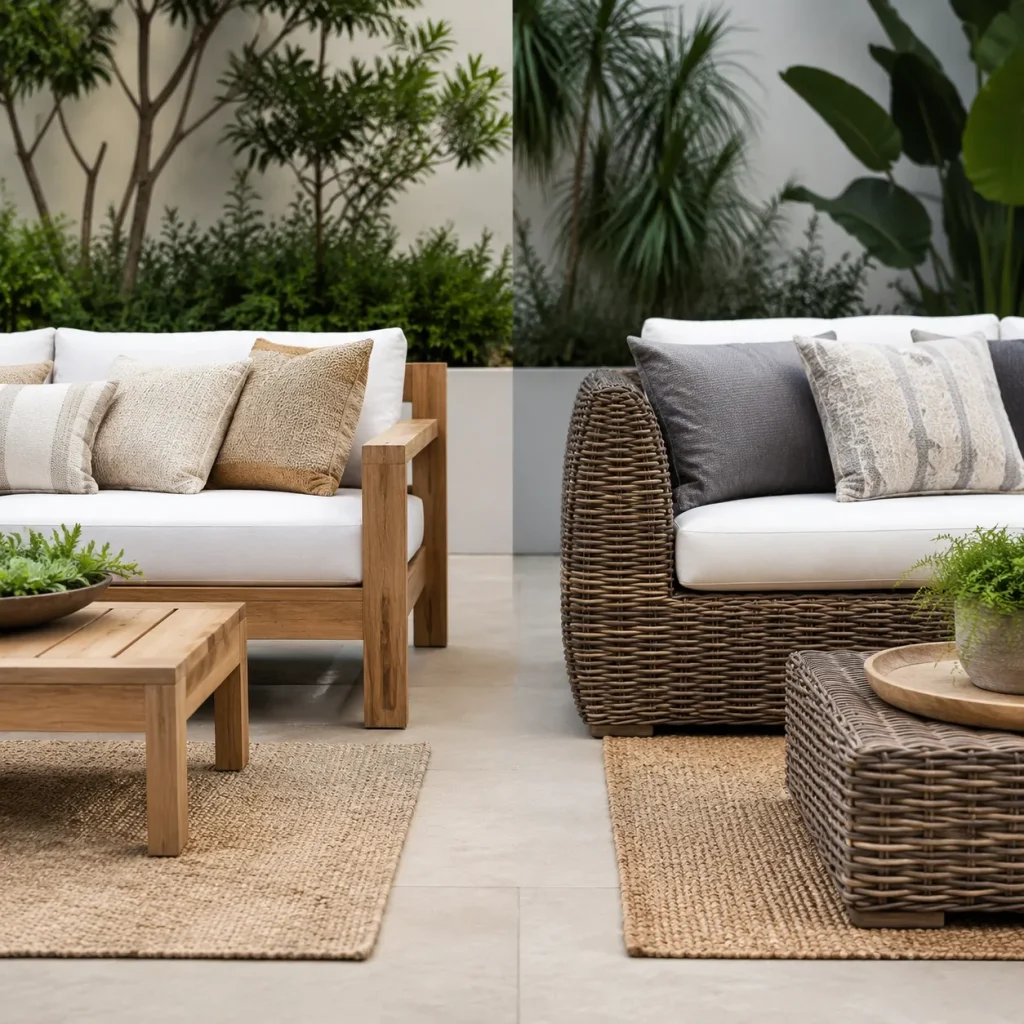
When I compare teak outdoor sofas with wicker, I look at more than style. I look at how the material handles full sun, rain, daily use, and long-term value. That is where the difference becomes clear.
| Factor | Teak Outdoor Sofas | Wicker Sofas |
|---|---|---|
| Weather performance | Strong natural weather resistance with built-in oils and dense grain | Depends on synthetic resin or PE rattan quality |
| Maintenance | Simple care, with color changing naturally over time | Needs regular cleaning to keep the weave looking fresh |
| Style | Warm, premium, and easy to match with modern patio furniture | Light, casual, and flexible for many outdoor layouts |
| Value | Higher upfront cost, stronger long-term investment value | Lower entry price, but shorter useful life in many cases |
Weather Resistance and Climate Performance
Teak stands out because of its natural oils and tight grain structure. That helps it resist moisture, rot, and daily climate stress better than many wicker builds. For buyers in rainy or coastal markets, this matters a lot. I often point buyers to weather-resistant outdoor furniture sets for rainy climates when they want a broader look at how outdoor materials perform in harsh weather.
Wicker can work well too, especially when it uses durable synthetic resin or PE rattan. Still, long sun exposure and heavy rain can be harder on the weave over time, especially in busy commercial spaces.
Maintenance and Upkeep Requirements
Teak is low-fuss. It does not need constant sealing to stay usable, and many buyers like the fact that it ages naturally. The surface may shift from golden-brown to a silver-grey patina, but that change is part of the material’s character.
Wicker usually needs more visual upkeep. Dirt can collect in the weave, and the surface may need more frequent cleaning to keep it looking sharp. If your schedule is packed, teak is usually the easier choice.
Aesthetic Appeal and Design Versatility
Teak brings a clean, natural look that feels warm and high-end. It works well for modern terrace setups, poolside layouts, and luxury patio furniture collections. The wood gives the space more depth and a stronger architectural feel.
Wicker is more relaxed and flexible in style. It suits casual garden seating and resort-style layouts, but it usually leans more decorative than structural. For buyers who want a premium finish, teak has the stronger presence.
Upfront Cost vs. Lifetime Value
Wicker often wins on starting price. Teak costs more upfront, but the long-term picture is different. Because teak offers stronger durability, better rot resistance, and lower replacement pressure, it can deliver better lifetime value.
For wholesale and commercial buyers, that gap matters. A sofa that lasts longer and holds its look better can reduce replacement cycles and protect budget over time. That is why I treat teak as a serious long-term investment value material, not just a premium finish.
For buyers comparing premium outdoor furniture options across climates and use cases, weather-resistant patio furniture wholesale collections can also help frame the value difference between high-end materials and standard woven builds.
How to Care for Your Teak and Wicker Sofas
I keep outdoor sofa care simple: use a routine that matches the material. Teak outdoor sofas are built around natural oils, dense grain, and long-term durability, while wicker patio furniture needs more regular cleaning to protect the weave, finish, and overall look.
Maintaining Teak Sofas to Preserve Color and Durability
Teak is one of the easiest materials to live with because it already has strong weather resistance and natural rot resistance. I treat it as a low-maintenance investment value piece, not a high-maintenance one.
- Wipe down dust and spills early. This helps keep the surface clean and supports long-term longevity.
- Use mild soap and water. Keep the cleaning simple so you do not strip the wood’s natural character.
- Let the wood dry fully after rain. Teak is made for outdoor use, but good airflow still helps the finish stay in shape.
- Oil only if you want to keep the warm color. If you like the natural silver-grey patina, you can let it age on its own.
- Cover it during harsh off-season storage. That extra step helps protect the sofa in global climates with strong sun, rain, or coastal air.
For buyers planning around strong sun exposure, I also use this guide on outdoor sofas for full sun exposure to match material care with real weather conditions.
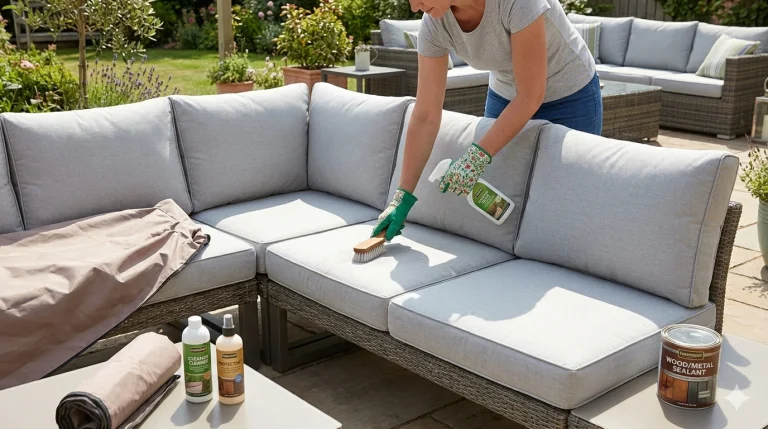
Cleaning and Protecting Wicker Outdoor Sofas
Wicker outdoor sofas, including PE rattan and synthetic resin styles, can look sharp and stay useful when I stay on top of routine care. The goal is simple: keep dirt out of the weave and stop moisture from sitting too long.
- Dust and rinse often. This keeps patio furniture looking fresh without heavy scrubbing.
- Use a soft brush for woven areas. It helps clean between strands without damaging the surface.
- Dry cushions and frames after wet weather. This reduces trapped moisture and helps protect the structure.
- Avoid harsh cleaners. Strong chemicals can dull the finish and shorten the clean look.
- Cover or store when not in use. That is the easiest way to extend the life of synthetic wicker outdoors.
For a closer look at style and weave options, I also reference classic-look wicker outdoor sofas when comparing upkeep, appearance, and long-term use.
Which Outdoor Sofa Material Is Right for You?
I look at this choice in a simple way: if the sofa will face strong sun, rain, coastal air, or heavy daily use, teak is usually the stronger long-term pick. If the goal is a classic woven look with a lower upfront spend, wicker can still make sense. For buyers comparing patio furniture by durability, weather resistance, and investment value, the right answer depends on how hard the furniture will work.
When Teak Outdoor Sofas Are Worth the Splurge
I recommend teak outdoor sofas when long service life matters more than short-term savings. Grade-A teak brings natural oils, dense grain, and strong rot resistance, which makes it a solid fit for full-sun settings and demanding outdoor spaces. It also ages well, developing a silver-grey patina over time or keeping a warm golden tone with light oiling.
- Best for: global climates, coastal areas, and high-use spaces
- Why it works: built-in weather resistance with low maintenance needs
- Value point: better long-term ROI because replacement cycles are lower
For buyers planning around climate and usage, I also find this guide useful: how to choose outdoor furniture based on footprint and lifestyle.
When Wicker Sofas Might Suit Your Space Better
Wicker outdoor sofas can be a good fit when you want a lighter visual style and a more accessible starting price. In today’s market, many buyers like the woven look because it feels relaxed and easy to style with other outdoor furniture. For spaces that do not need the same level of structural longevity as teak, wicker can be the practical choice.
- Best for: style-focused spaces and budget-conscious projects
- Why it works: classic woven texture with a familiar patio look
- Trade-off: lower upfront cost, but usually less long-term value than teak
For coastal and exposed locations, I lean toward teak more often, since material choice matters a lot when moisture, sun, and salt air are part of the equation. That is also why I pay close attention to weather performance before I recommend any sofa line.