Importing Outdoor Furniture from China: Customs, Tariffs & Shipping Explained
Importing outdoor furniture from China gives wholesalers, retailers, and hospitality buyers access to factory-direct pricing that domestic supply rarely matches. However, the number on your purchase order tells only part of the story. Customs duties, tariffs, documentation, and clearance procedures all shape the final landed cost. Consequently, buyers who master the import process protect their margins and keep deliveries on schedule.
This guide walks through every stage of the journey: HS code classification, duty rates in major markets, required documents, and the customs clearance sequence. For cost allocation between buyer and seller, pair it with our explanation of FOB, CIF, and DDP shipping terms. Together, they form a complete picture of your import budget.

Key Takeaways
- First, correct HS classification determines your duty rate.
- Additionally, US buyers face Section 301 tariffs of 25% on most Chinese furniture.
- Moreover, complete documentation prevents costly clearance delays.
- Finally, FCL shipping lowers the landed cost per unit for bulk orders.
Why Buyers Import Outdoor Furniture from China
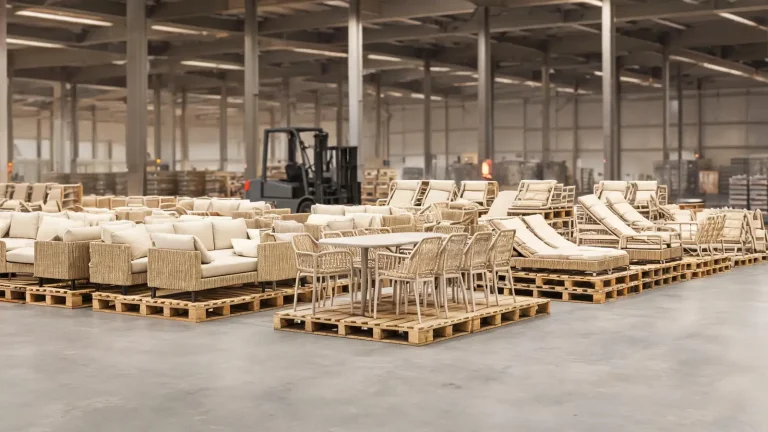
China manufactures the majority of the world’s outdoor furniture. Industrial clusters in Foshan, Zhejiang, and Linhai concentrate frame fabrication, weaving, powder coating, and cushion production within a few hours of each other. Therefore, a single order can move from aluminum tube to packed container without leaving the region. This supply chain density lowers both cost and lead time.
The product range adds another advantage. Buyers source outdoor sofa collections, dining sets, sun loungers, and outdoor tables from the same factory, consolidating mixed containers efficiently. If you are still selecting suppliers, start with our sourcing guide and verification checklist before comparing prices.
HS Codes for Outdoor Furniture
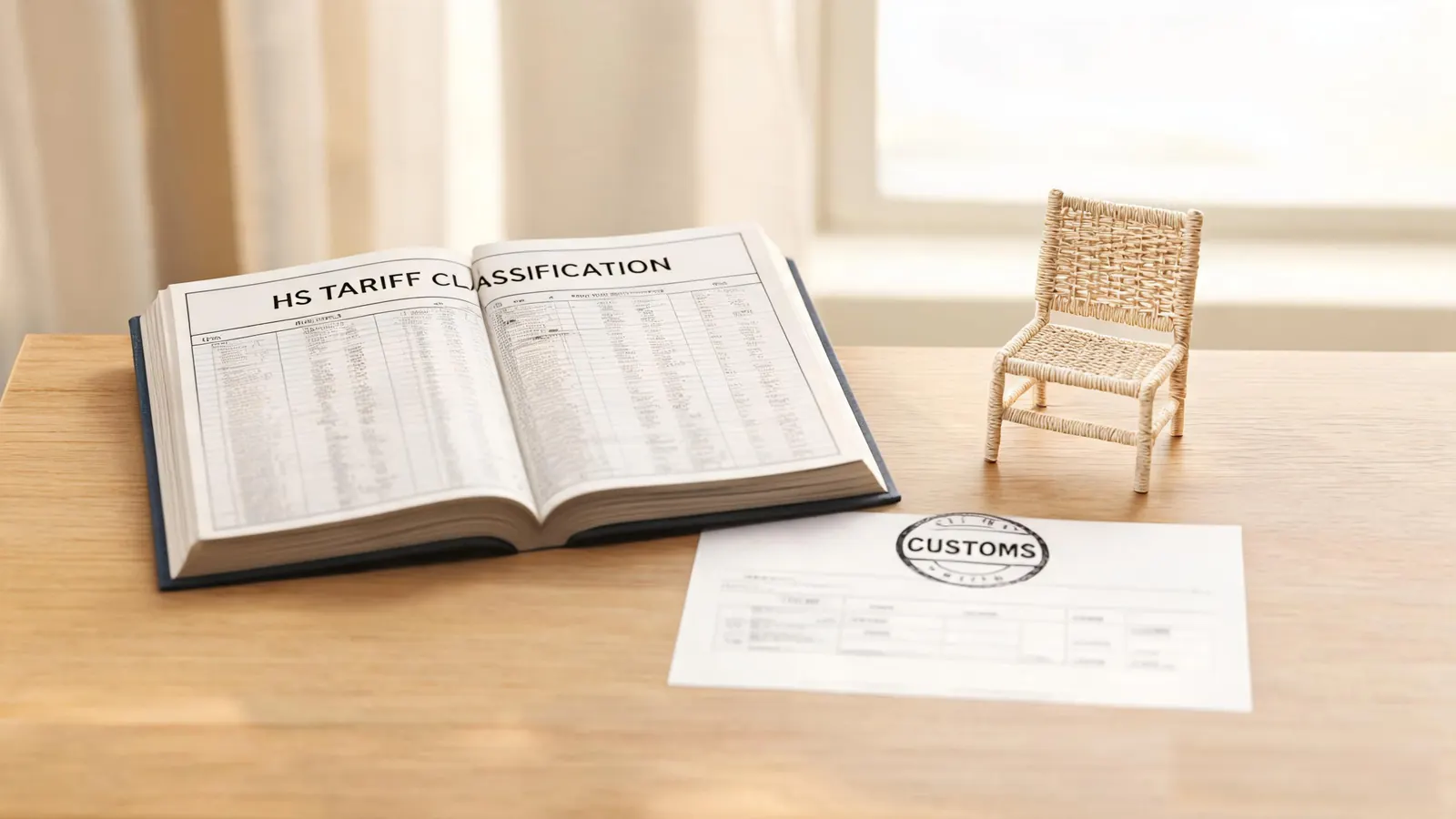
Every product crossing a border needs a Harmonized System (HS) code. Customs authorities use this classification to set duty rates, enforce trade policy, and compile trade statistics. Because furniture codes differ by material and function, classification errors are among the most common and expensive import mistakes.
Common HS Codes for Furniture Products
The table below lists the codes that cover most outdoor furniture shipments. Note that the first six digits are international standard, while importing countries extend them with additional digits.
| HS Code | Product Category | US MFN Duty | EU Duty (approx.) |
|---|---|---|---|
| 9401.61 | Upholstered seats with metal frames (cushioned chairs, sofa seats) | 0% | 5.6% |
| 9401.71 | Other seats with metal frames (stacking chairs, loungers) | 0% | 2.7% |
| 9403.20 | Metal furniture (aluminum tables, frames, sofa bodies) | 0% | 5.6% |
| 9403.81 | Bamboo or rattan furniture (woven garden sets) | 0% | 2.7% |
| 9403.82 | Plastic furniture (resin chairs, tables) | 0% | 5.6% |
Rates are approximate third-country rates for reference only. Verify with your customs broker or the official TARIC database before ordering.
Always confirm classification with a licensed customs broker or request a binding ruling. In the United States, CBP issues binding rulings, and in the European Union you can apply for Binding Tariff Information (BTI). Either document locks your duty rate before you ship. Accordingly, classification certainty becomes an asset you can price into every quote.
Import Duties and Tariffs by Market

United States: MFN Rates and Section 301 Tariffs
Most outdoor furniture HS codes carry a 0% Most Favored Nation (MFN) duty in the United States. However, goods of Chinese origin face additional Section 301 tariffs, typically 25% on top of the MFN rate. Duties are calculated on the transaction value, usually the FOB price declared on your commercial invoice.
Consequently, a container with a $25,000 FOB value may owe roughly $6,250 in Section 301 duties alone. Budget for this from day one, because duty bills arrive before your goods release. Some exclusions have applied temporarily in past years, yet relying on them is risky. Plan around the full tariff unless your broker confirms an active exclusion.
European Union: Duty and VAT
EU duty rates on furniture range from 0% to about 5.6% depending on the code. Value Added Tax applies on top of duty, calculated on the CIF value plus duty. Rates vary by country: Germany charges 19%, France 20%, and Sweden 25%. Importers also need an EORI number before the first shipment clears. Therefore, register early to avoid container storage fees while paperwork catches up.
Other Markets at a Glance
- Australia: Additionally, most furniture enters duty-free, with a 10% GST applied to the landed value.
- Canada: Duties range from 0% to 9.5% depending on the code, and the 5% GST applies at import.
- United Kingdom: The UK Global Tariff broadly mirrors EU rates, while 20% VAT applies on imports.
- Gulf states: Meanwhile, Saudi Arabia and the UAE apply a 5% customs duty, and the UAE adds 5% VAT.
Essential Import Documents You Must Prepare
Customs clearance succeeds or fails on paperwork. Missing or inconsistent documents trigger inspections, fines, and storage charges. Prepare the following set before your container sails.
- Commercial invoice: First, this document states the transaction value, Incoterm, and parties. Customs uses it as the duty basis, so figures must match your purchase order exactly.
- Packing list: Additionally, it details carton counts, weights, and dimensions per item, allowing officers to verify contents quickly.
- Bill of lading: Next, the carrier issues this transport contract and title document. Telex release or original copies determine when you can collect the container.
- Certificate of origin: Furthermore, some markets require it to confirm where goods were made, which drives tariff treatment under trade agreements.
- Fumigation or ISPM-15 evidence: Moreover, wooden crates and pallets must meet international wood packaging standards, or authorities may order treatment or re-export.
- Insurance certificate: Finally, CIF buyers receive this from the supplier, while FOB buyers arrange their own coverage before loading.
The Customs Clearance Process Step by Step
Clearance follows a predictable sequence in most countries. Knowing each stage helps you anticipate delays and communicate with your broker.
- First, your broker files an entry declaration with customs before or upon vessel arrival, using the documents above.
- Next, customs assesses the declared value, HS code, and origin, then calculates duty and tax.
- Then, you or your broker pay the duty invoice. Payment terms vary by country and broker arrangement.
- Subsequently, customs may flag the shipment for examination. Inspections add two to seven days and generate labor fees.
- Additionally, once released, the terminal issues a delivery order and the container moves by truck or rail to your warehouse.
- Finally, return the empty container within the free period to avoid detention charges.
FCL vs LCL: Choosing Your Shipping Method
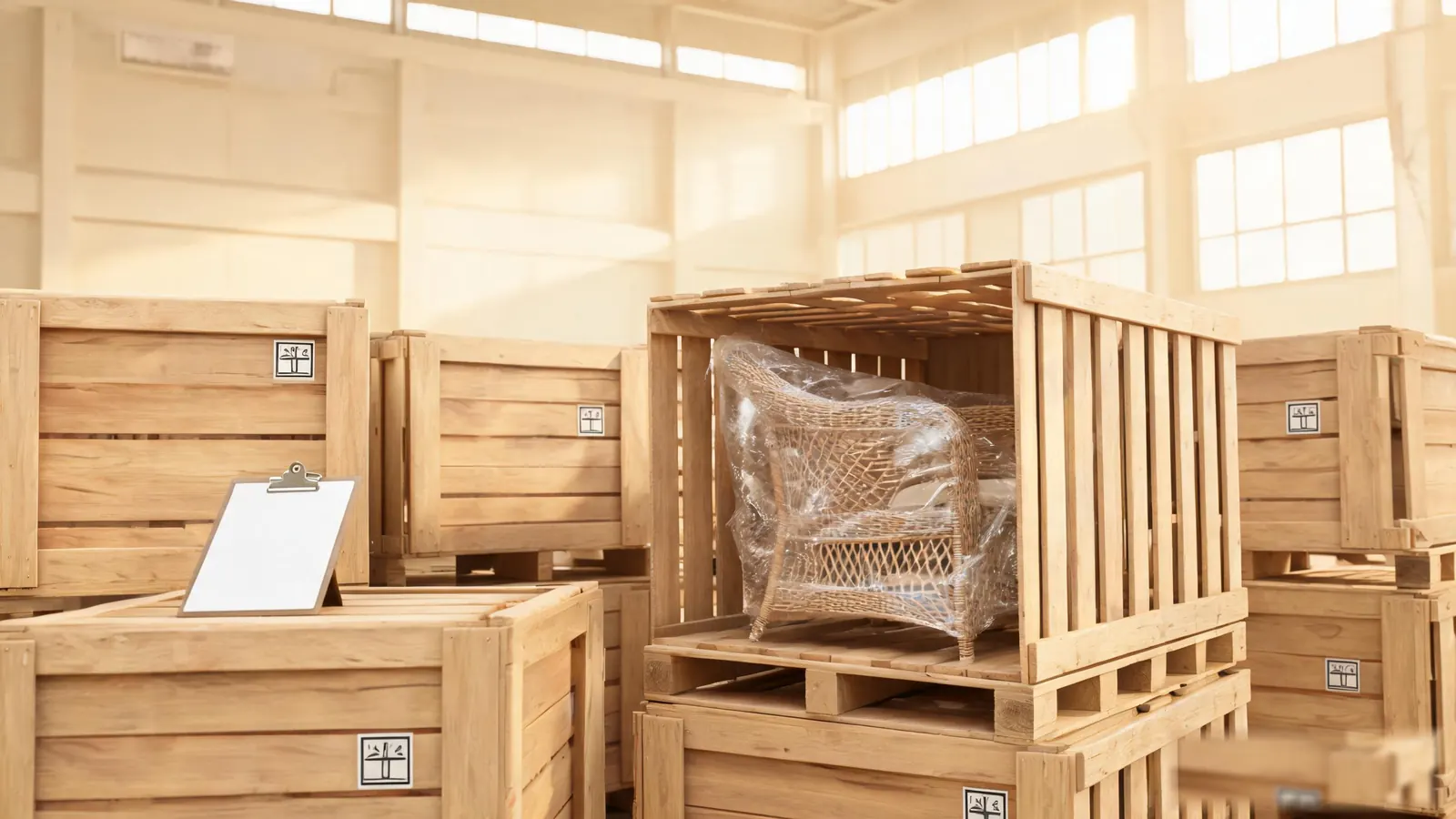
A full container load (FCL) gives you exclusive use of a 20ft, 40ft, or 40ft high cube unit. Outdoor furniture packs efficiently, and a 40HQ typically holds a mixed load of sofa sets, chairs, and tables worth $25,000 to $40,000. Per-unit freight cost drops sharply at FCL volumes.
Less than container load (LCL) suits trial orders and small ranges. Your goods share space with other importers, so you pay only for the volume used. However, LCL adds handling at consolidation warehouses, raising damage risk and adding three to seven transit days. For first small orders, our outdoor furniture MOQ guide explains how to balance order size against unit economics.
Common Customs Problems and How to Avoid Them
Most clearance disasters trace back to a handful of preventable errors. Review this list before every shipment.
- Late ISF filing: US importers must file Importer Security Filing (10+2) at least 24 hours before loading. First, note that late filings trigger penalties up to $5,000 per violation.
- Undervaluation: Additionally, declaring prices below the real transaction value invites audits, retroactive duties, and shipment holds. Customs compares invoices against market benchmarks.
- Missing EORI or importer registration: Furthermore, EU goods cannot clear without a valid EORI number, and several other markets require local importer registration.
- Non-compliant wood packaging: Moreover, crates without ISPM-15 treatment may face forced treatment, re-export, or destruction at the importer’s expense.
- Document inconsistencies: Finally, mismatched weights, quantities, or values across invoice, packing list, and bill of lading almost guarantee examination. Cross-check every document before sailing.
Frequently Asked Questions
Duties and Tariff FAQs
How much duty do I pay when importing outdoor furniture from China?
Duty depends on your HS code and destination market. In the United States, most furniture codes carry 0% MFN duty, however Section 301 adds 25% on goods of Chinese origin. EU rates run from 0% to 5.6%, with VAT of 19% to 25% on top. Therefore, ask your broker to confirm the exact rate for each product before you order.
What is the HS code for outdoor furniture?
Seats fall under heading 9401, while tables and other furniture fall under heading 9403. Common codes include 9401.61 for upholstered metal-frame seats, 9403.20 for metal furniture, and 9403.81 for rattan furniture. Classification follows material and function, so a single dining set may split across two codes. Consequently, confirm each product code with your broker rather than guessing.
Is duty calculated on the FOB value or the full product price?
The United States calculates duty on the transaction value, typically the FOB price declared on the commercial invoice. The European Union calculates duty on the CIF value, which includes freight and insurance. As a result, the same container can generate different duty bases in different markets. Factor this into your landed cost model from the start.
Documents and Clearance FAQs
What documents are required to import outdoor furniture?
The core set includes a commercial invoice, packing list, bill of lading, certificate of origin, and evidence of ISPM-15 compliant wood packaging. Additionally, US shipments require Importer Security Filing before loading, and EU importers need a valid EORI number. Suppliers normally issue the export documents, however you remain responsible for destination-side filings.
How long does customs clearance take for furniture imports?
Straightforward shipments clear in one to three working days after arrival in most markets. Examinations add two to seven days plus labor fees. Therefore, submit documents to your broker before the vessel departs, because pre-lodged entries release fastest. Accurate paperwork remains the single biggest time saver.
What happens if my goods are classified under the wrong HS code?
Customs can retroactively collect underpaid duty, apply penalties, or hold future shipments until records are corrected. However, you can protect yourself in advance by requesting a binding ruling from US Customs or Binding Tariff Information in the EU. These decisions lock your classification and duty rate, consequently removing uncertainty for repeat orders.
Import Outdoor Furniture Without the Guesswork
Hiway Trade exports outdoor furniture worldwide with complete, accurate export documentation. Request a quotation with full customs support for your market.
Request a Quote