Deep Seating vs Standard Outdoor Sofa: 5 Comfort Factors Compared
Choosing the right outdoor sofa isn’t just about looks — it’s about how you actually use your outdoor space. Deep seating and standard outdoor sofas serve very different purposes, and picking the wrong one can leave you with a beautiful patio set that nobody wants to sit on. In this guide, we compare five key comfort factors so you can make the right call the first time.
When shopping for outdoor sofas, you’ll quickly notice that models fall into two broad categories: deep seating and standard seating. Deep seating sofas feature seat depths of 22 inches or more, designed for lounging and full-body relaxation. Standard outdoor sofas typically have seat depths between 16 and 20 inches, promoting an upright posture suited for dining and conversation.
As a garden furniture manufacturer with over 15 years of experience, we’ve helped countless homeowners, hoteliers, and commercial buyers select the right sofa for their outdoor spaces. In this article, we break down the five most important comfort factors that distinguish deep seating from standard outdoor sofas — seat depth, cushion density, back support, frame design, and versatility — so you can choose with confidence.
The Short Answer
Here’s a quick snapshot of how deep seating and standard outdoor sofas compare:
- Deep seating is best for lounging, napping, and extended relaxation — think 2+ hours of comfortable seating.
- Standard seating is best for dining, entertaining, and shorter sitting sessions where an upright posture is preferred.
- The biggest factor is seat depth: 22″+ for deep seating vs. 16–20″ for standard.
- Choose deep seating if your outdoor space is a relaxation zone. Choose standard if it doubles as a dining area.
Factor 1: Seat Depth — The Fundamental Difference
Seat depth is the single most important measurement that separates a deep seating sofa from a standard one. It affects how you sit, how long you can comfortably stay seated, and whether the sofa works for your body type.
Standard Outdoor Sofa: 16–20 Inches
Standard outdoor sofas typically offer a seat depth of 16 to 20 inches. This depth encourages an upright sitting position where your back rests against the backrest and your feet sit flat on the floor. It’s the same posture you’d adopt at a dining table — and for good reason. Standard seating pairs naturally with outdoor tables for al fresco dining.
The advantage of standard depth is that it’s easy to get in and out of, making it ideal for settings where people frequently stand up to serve food, grab drinks, or mingle. The trade-off is that after about an hour, most people start to feel restless — the seat doesn’t allow you to truly relax or recline.
Deep Seating Sofa: 22–27+ Inches
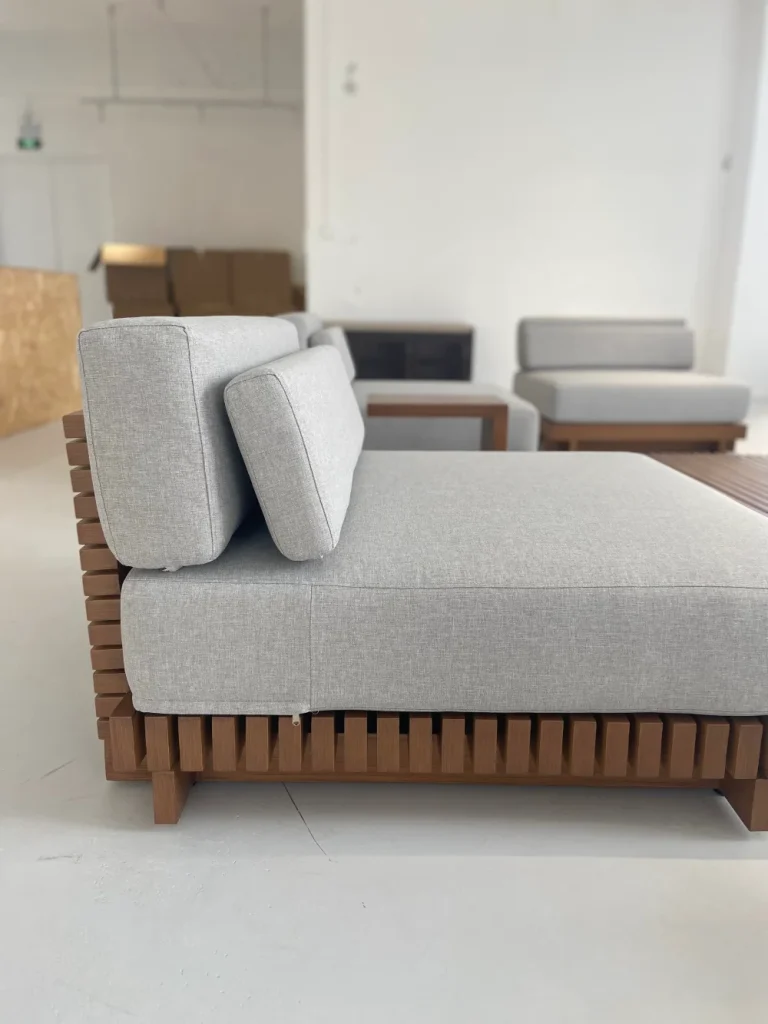
Deep seating sofas measure 22 inches or more in seat depth, with some extra-deep models exceeding 27 inches. Those extra few inches fundamentally change how you use the furniture. With a deep seat, you can tuck your legs up, curl sideways, or stretch out fully — positions that are simply impossible on a standard-depth sofa.
Deep seating is designed for what furniture designers call “lounge posture” — a semi-reclined position where your weight is distributed across your back, thighs, and the seat cushion. This is the same posture you’d adopt on a living room sofa or a chaise lounge. The trade-off? Deep seating can be harder for shorter individuals to sit upright, and it’s not ideal for eating at a standard-height table.
Standard Depth (16–20″)
- Upright posture — great for dining
- Easy to get in and out of
- Works with standard-height tables
- Comfortable for 45–60 min sessions
- Better for smaller patios (compact footprint)
Deep Seating (22–27″+)
- Reclined/lounging posture — great for relaxation
- Harder to exit for shorter users
- Needs a lower coffee table, not a dining table
- Comfortable for 2+ hour sessions
- Requires more space — larger footprint
For taller individuals (5’10” and above), deep seating is often the more comfortable choice because standard-depth seats leave their knees unsupported, causing legs to dangle and creating pressure behind the thighs. For a practical example, our three-seat outdoor sofa offers a generous seat depth designed for extended lounging comfort.
Factor 2: Cushion Thickness and Density
The second major comfort factor is cushion quality — and this is where deep seating and standard sofas diverge significantly. It’s not just about how thick the cushion is; it’s about how the cushion is constructed and what it’s made of.
Standard Sofa Cushions: 2–3 Inches Thick
Standard outdoor sofas typically come with cushions that are 2 to 3 inches thick. These thinner cushions are designed to provide a basic layer of comfort over a firmer seat base. They’re usually made from medium-density polyurethane foam or polyester fill — materials that are lightweight, quick-drying, and affordable.
The thinner profile works well for standard seating because the upright posture already distributes weight relatively evenly. You don’t need thick cushioning to stay comfortable for a 30-minute meal or a short conversation. However, if you try to lounge on a standard sofa for an extended period, you’ll start to feel the hard seat base through the thin cushion.
Deep Seating Cushions: 4–6+ Inches Thick
Deep seating sofas come with significantly thicker cushions — typically 4 to 6 inches or more. These cushions are built with high-density foam cores, often wrapped in polyester fiber or topped with memory foam layers. The extra thickness serves a real purpose: when you’re in a reclined lounging position, your body weight is concentrated differently than when sitting upright, and you need more cushioning to prevent pressure points.
Quality deep seating cushions also use premium outdoor fabrics like Sunbrella or Olefin, which resist UV fading, repel water, and dry quickly after rain. The combination of thick, high-density foam and premium fabric is what makes deep seating genuinely comfortable for hours at a stretch — not just the extra seat depth alone.
If you’re comparing options, look closely at cushion specifications. A sectional sofa with deep seating should specify foam density (look for 1.8–2.5 lb/ft³ for good quality) and fabric type. Anything less than 4 inches of cushion thickness in a deep seating sofa is a red flag — the manufacturer is cutting corners.
Factor 3: Back Support and Posture
How a sofa supports your back determines whether you’ll feel refreshed or stiff after sitting on it. Back support is the third critical comfort factor, and it’s where the design philosophies of deep seating and standard sofas really diverge.
Standard Sofa: Upright Support
Standard outdoor sofas are designed with relatively straight backrests at an angle of about 90–95 degrees. This encourages an upright posture that’s ideal for eating, drinking, and face-to-face conversation. The backrest height is typically moderate — enough to support your lower and mid-back, but not tall enough to rest your head.
The upright angle means your core muscles stay engaged, which is fine for shorter sessions but becomes fatiguing after an hour or so. This is why standard seating is best paired with activities — dining, games, socializing — rather than pure relaxation.
Deep Seating: Reclined Support
Deep seating sofas feature backrests angled at 100–110 degrees — a reclined position that lets you lean back and truly relax. The backrests are also typically taller, often 20+ inches, providing support from your lower back all the way up to your shoulders or head. Many deep seating sets also include separate lumbar pillows that allow you to customize support for your lower back.
This reclined angle is the same one used in indoor living room furniture and outdoor daybeds. It distributes your body weight across a larger surface area, reducing pressure on any single point. The result is a sofa you can sink into for hours — reading, napping, or watching the sunset — without feeling the need to shift positions constantly.
Standard Back Support
- Backrest angle: 90–95° (upright)
- Backrest height: 14–18 inches
- Supports lower and mid-back
- Encourages active, engaged posture
- Best for: dining, conversation, entertaining
Deep Seating Back Support
- Backrest angle: 100–110° (reclined)
- Backrest height: 20–26 inches
- Supports lower back to shoulders/head
- Often includes removable lumbar pillows
- Best for: lounging, reading, napping
It’s worth noting that some modern deep seating designs, like our single-seat outdoor sofa, offer adjustable backrest positions. These give you the flexibility to switch between upright and reclined postures depending on the activity — a great option if your outdoor space serves multiple purposes.
Factor 4: Frame Design and Ergonomics
Comfort isn’t just about cushions and depth — the frame itself plays a huge role. The way a sofa’s frame is constructed affects seat height, armrest comfort, weight distribution, and even how the furniture ages over time.
Seat Height Differences
Standard outdoor sofas typically have a seat height of 17–19 inches from the ground — roughly the same as a dining chair. This height makes it easy to sit down, stand up, and pull up to a dining table. Deep seating sofas, by contrast, often have a lower seat height of 14–16 inches. The lower profile contributes to the lounging feel — you sink into the sofa rather than perching on it.
Armrest Design
Deep seating sofas tend to feature wider, padded armrests (4–8 inches wide) that can double as headrests or side tables for drinks. Standard sofas usually have narrower, firmer armrests (2–4 inches) that are functional but not particularly comfortable for resting your arm for long periods.
Frame Materials Matter
Both deep seating and standard sofas are available in a range of frame materials, but the choice of material affects comfort more than most people realize:
- Powder-coated aluminum is the most popular frame material for both types. It’s lightweight, rustproof, and provides excellent structural support. Learn more in our guide to powder-coated aluminum vs. stainless steel outdoor furniture.
- PE rattan over aluminum adds a natural, textured look while maintaining the durability of an aluminum frame. This is a popular choice for deep seating sets because the woven rattan adds visual warmth that complements the plush cushions.
- Teak and hardwood frames are premium options that offer natural beauty and exceptional longevity. They’re more common in high-end deep seating collections.
If you live in a humid or coastal area, frame material is especially important. Our guide on choosing outdoor furniture for coastal areas covers which materials stand up best to salt air and moisture.
Factor 5: Versatility and Use Case Suitability
The fifth comfort factor isn’t about physical ergonomics — it’s about how well the sofa fits your intended use. A sofa can be perfectly designed for lounging, but if your outdoor space is primarily a dining area, it won’t feel “comfortable” because it doesn’t match your lifestyle.
When Standard Seating Wins
Standard outdoor sofas shine in these scenarios:
- Outdoor dining areas — Pair a standard sofa with an extendable dining table for a cohesive dining set that encourages upright posture.
- Small patios and balconies — Standard-depth sofas have a smaller footprint, making them ideal for compact spaces.
- Entertaining-heavy spaces — If your patio is primarily for hosting guests for drinks and conversation, the upright posture keeps energy high and makes it easy for people to stand and mingle.
- Multi-generational use — Standard seating is easier for elderly family members to get in and out of, since the higher seat height requires less knee bend.
When Deep Seating Wins
Deep seating sofas are the better choice when:
- Your outdoor space is a relaxation zone — If the primary purpose of your patio or garden is unwinding after work, reading, or napping, deep seating is the clear winner.
- You’re creating a conversation pit — Deep seating sectionals, like our modular sectional sofas, create an intimate, enclosed seating area that encourages long, relaxed conversations.
- You have the space for it — Deep seating requires more square footage. If you have a large patio, deck, or garden, the generous proportions feel luxurious rather than cramped.
- You’re furnishing a vacation rental or boutique hotel — Guests associate deep seating with luxury and comfort, making it a smart choice for hospitality settings. Our commercial outdoor furniture buying guide covers this in detail.
The Hybrid Solution
Can’t decide? Many homeowners opt for a hybrid approach: a deep seating set for the lounge area and a standard dining set for the eating area. If space allows, this gives you the best of both worlds. You can also mix and match — pair a deep seating sofa with standard-height dining armchairs around a coffee table for a relaxed but versatile setup.
Comparison Summary: At a Glance
| Comfort Factor | Standard Outdoor Sofa | Deep Seating Sofa |
|---|---|---|
| Seat Depth | 16–20 inches (upright) | 22–27+ inches (lounging) |
| Cushion Thickness | 2–3 inches, medium-density foam | 4–6+ inches, high-density foam |
| Back Support | 90–95° angle, 14–18″ height | 100–110° angle, 20–26″ height |
| Frame Design | 17–19″ seat height, narrow arms | 14–16″ seat height, wide padded arms |
| Best Use Case | Dining, entertaining, short sessions | Lounging, relaxing, extended sessions |
| Comfort Duration | 45–60 minutes | 2+ hours |
| Footprint | Compact — good for small spaces | Large — needs more room |
How to Choose the Right Outdoor Sofa for Your Space
Now that you understand the five key comfort factors, here’s a practical decision framework to help you choose:
Step 1: Define Your Primary Activity
Ask yourself: what will you do most often on this sofa? If the answer is “eat meals with family,” go with standard seating. If it’s “curl up with a book on weekend mornings,” deep seating is the way to go. If you’re unsure, consider how you currently use your indoor living room — do you sit upright or recline?
Step 2: Measure Your Space
Deep seating sets need roughly 20–30% more space than standard sets of the same seating capacity. Measure your patio or garden area, leaving at least 3 feet of clearance around the furniture for traffic flow. If space is tight, a single-seat sofa or a compact standard-depth set may be more practical.
Step 3: Consider Your Climate
Deep seating cushions are thicker and take longer to dry after rain. If you live in a rainy climate, look for quick-dry foam inserts and water-repellent fabric. Our guide to the best weather-resistant outdoor furniture for rainy climates has specific recommendations.
Step 4: Factor In Cushion Maintenance
Deep seating cushions are heavier, thicker, and need more storage space during off-seasons. Standard cushions are lighter and easier to store. Plan for furniture covers or indoor storage regardless of which type you choose.
Step 5: Think About Who Will Use It
If elderly family members or guests with mobility issues will use the furniture regularly, standard seating is easier to get in and out of. Taller individuals (5’10″+) generally find deep seating more comfortable because it provides proper thigh support.
Frequently Asked Questions
What is the difference between deep seating and standard outdoor furniture?
The main difference is seat depth. Deep seating furniture has a seat depth of 22 inches or more, designed for lounging and reclining. Standard outdoor furniture has a seat depth of 16–20 inches, designed for upright sitting. Deep seating also typically features thicker cushions (4–6+ inches), reclined backrests (100–110°), and wider armrests compared to standard seating.
Is deep seating better than standard outdoor seating?
Neither is universally “better” — it depends on how you use your outdoor space. Deep seating is better for relaxation, lounging, and extended sitting (2+ hours). Standard seating is better for dining, entertaining, and shorter sessions where an upright posture is preferred. Many homeowners choose to have both: a deep seating set for the lounge area and a standard dining set for the eating area.
What seat depth is considered deep seating?
Deep seating is generally defined as any seat with a depth of 22 inches or more. Medium-lounge depth is typically 22–24 inches, while extra-deep models can reach 27–30+ inches. Standard outdoor seating is 16–20 inches. If you’re between 20–22 inches, you’re in a transition zone — check the backrest angle and cushion thickness to determine which category the sofa falls into.
Can I use deep seating sofas for outdoor dining?
It’s not ideal. Deep seating sofas sit lower to the ground and have reclined backrests, which means you’d be leaning back away from the table. This makes eating uncomfortable and can put you too far from the table surface. If you want to combine lounging and dining, consider a hybrid setup: deep seating around a low coffee table for lounging, plus standard chairs around a dining table for meals.
How thick should deep seating cushions be?
Deep seating cushions should be at least 4 inches thick, with premium models reaching 5–6 inches or more. The foam inside should be high-density (1.8–2.5 lb/ft³) to prevent sagging over time. Look for cushions with a UV-resistant, water-repellent fabric cover like Sunbrella or Olefin, and quick-dry foam inserts if you live in a rainy climate.
Are deep seating outdoor sofas more expensive than standard ones?
Generally yes, deep seating sofas cost more than standard ones because they use more material — thicker cushions, larger frames, and more fabric. A mid-range deep seating set typically costs $600–$2,000, while a comparable standard set might cost $400–$1,200. However, deep seating often lasts longer because the premium materials used tend to be more durable. Buying directly from a manufacturer like Hiway Trade can reduce the price gap significantly.
Conclusion: Which Should You Choose?
The choice between deep seating and standard outdoor seating comes down to one fundamental question: how do you want to use your outdoor space?
If your patio or garden is primarily a place to eat, entertain, and socialize, a standard outdoor sofa with its upright posture and compact footprint is the right choice. It pairs perfectly with dining tables, fits smaller spaces, and makes it easy for guests to sit and stand throughout a gathering.
If your outdoor space is a retreat — a place to read, nap, sip coffee, and truly unwind — then deep seating is worth every penny. The combination of generous seat depth, thick high-density cushions, and reclined back support creates a level of comfort that standard seating simply can’t match. For inspiration, browse our complete outdoor sofa collection, which includes both deep seating and standard options to suit every space and budget.
And remember: the best outdoor sofa is one that matches your lifestyle. Don’t buy deep seating if you never lounge, and don’t settle for standard depth if your idea of a perfect afternoon is curling up with a book in the garden. Choose the sofa that fits how you actually live — not just how it looks in a catalog.
Still Unsure Which Outdoor Sofa Is Right for You?
Our team at Hiway Trade has been manufacturing quality outdoor furniture for over 15 years. We can help you choose the perfect sofa — whether deep seating or standard — for your space, climate, and budget. We also offer OEM/ODM customization for commercial buyers.
Get a Free Quote